




Resumen
For procurement managers and project engineers sourcing bulk material handling systems, selecting the right recuperador apilador supplier is among the most consequential decisions in capital equipment planning. A miscalculated vendor choice can cascade into throughput bottlenecks, unplanned downtime, and multi-million-dollar remediation costs across a project’s operational lifecycle.
This guide provides a structured evaluation framework for comparing leading stacker reclaimer manufacturers across four critical dimensions: technical specifications, compliance credentials, commercial reliability, and application-specific performance. Whether you are commissioning a greenfield coal stockyard in a mining basin or upgrading a port terminal’s bulk cargo handling infrastructure, the criteria outlined here enable rigorous side-by-side supplier comparison. Decision-makers will gain clarity on what differentiates high-performing bulk material handling equipment vendors from commodity suppliers — and how to translate that differentiation into procurement decisions that protect both capital investment and operational continuity.
1: Understanding Stacker Reclaimer Technology & Equipment Classification
1.1: Core Operating Principles of Stacker Reclaimers
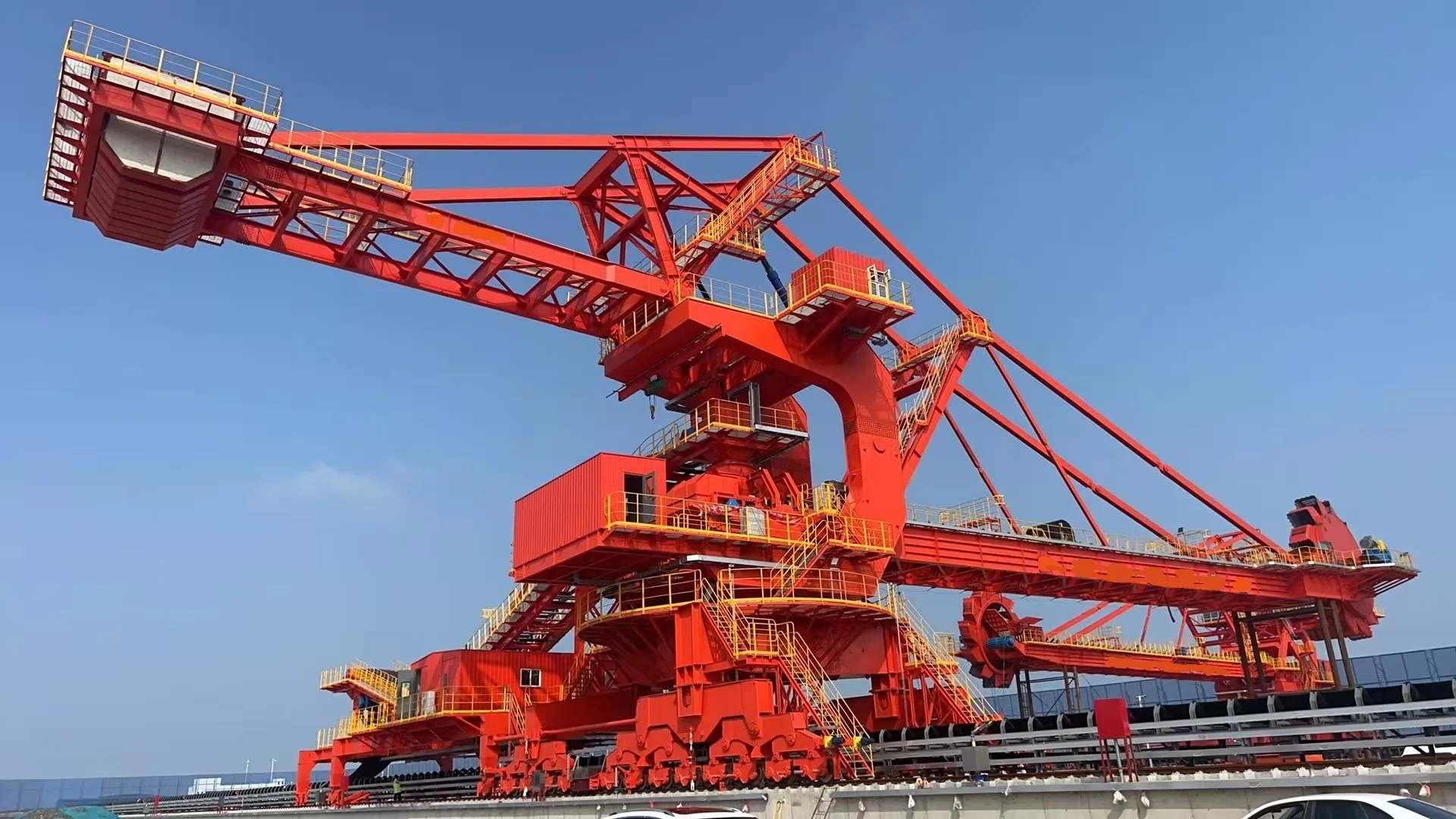
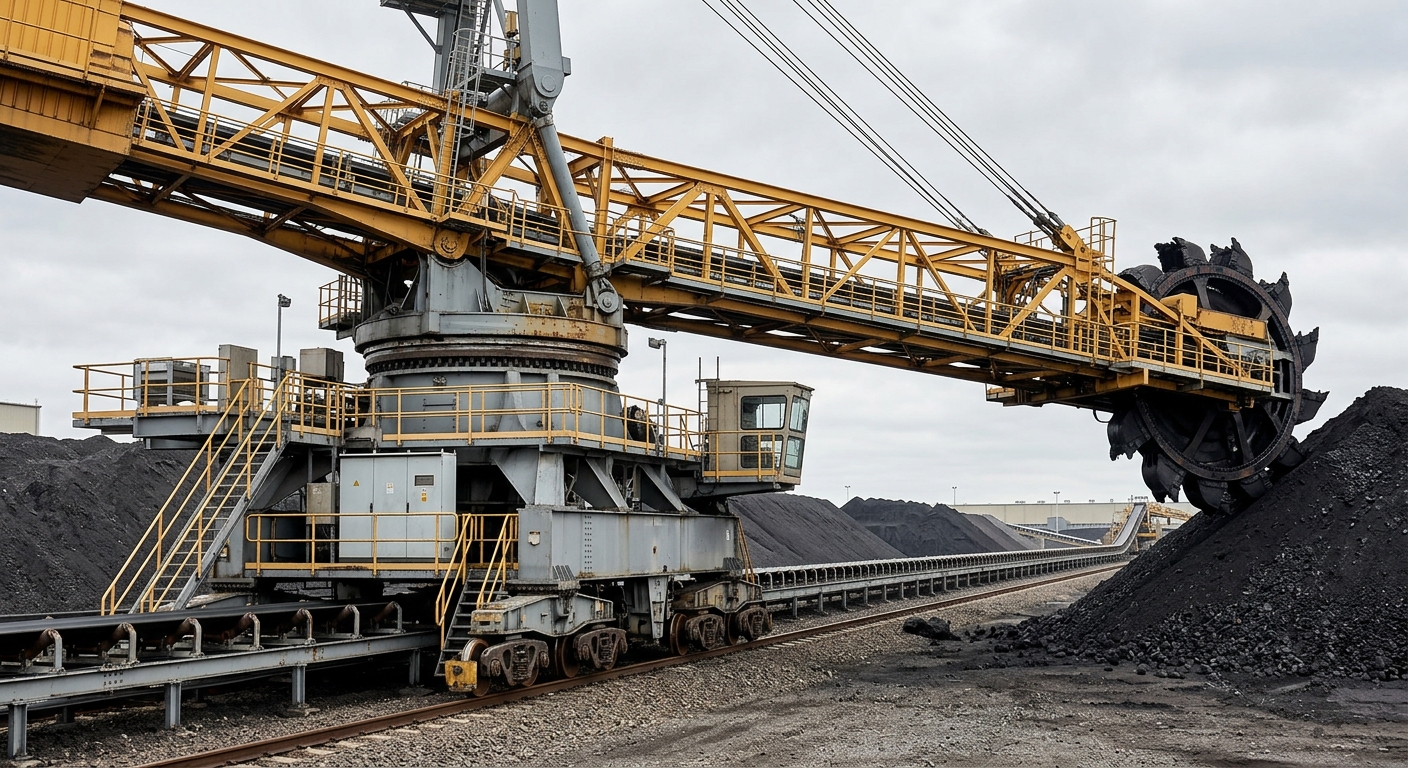
A stacker reclaimer is a dual-function machine designed to build stockpiles (stacking mode) and recover material from those stockpiles for onward processing or loading (reclaiming mode). Three primary kinematic mechanisms define its operational envelope:
- Giratorio: Rotation of the boom assembly around the central column, typically ranging from 120° to 360°, enabling the machine to cover a defined stockyard arc without repositioning the travel drive.
- Luffing: Vertical angular adjustment of the boom, allowing the machine to adapt stacking height or reclaiming depth without repositioning along the rail.
- Traveling: Linear movement along a fixed rail track, extending the machine’s coverage across the full length of a stockyard.
Reclaiming technology splits into two dominant configurations. Bucket wheel reclaimers use a rotating wheel fitted with buckets to excavate material from the stockpile face — preferred for high-throughput applications involving free-flowing bulk materials such as coal, iron ore, and limestone. Scraper chain reclaimers deploy a drag chain system across the stockpile base, better suited for materials with irregular flow characteristics or where stockpile geometry is constrained.
1.2: Mining vs. Harbor Application Requirements
Mining and harbor deployments impose fundamentally different engineering constraints. Mining operations typically prioritize stockpile density management, integration with overland conveyor systems, and resistance to abrasive, high-silica materials. Harbor terminals, by contrast, demand rapid vessel turnaround, corrosion resistance in saline environments, and compliance with port authority dust emission limits.
Stacker Reclaimer Equipment Classification Overview
| Tipo de equipo | Rated Capacity (t/h) | Boom Length (m) | Applicable Material | Aplicación típica | Drive System |
|---|---|---|---|---|---|
| Bucket Wheel Stacker Reclaimer | 1,000 – 10,000 | 30 – 65 | Coal, Iron Ore, Limestone | Mining Stockyard, Power Plant | Electric / VFD |
| Scraper Chain Reclaimer | 500 – 3,000 | 20 – 45 | Grain, Fertilizer, Clinker | Port Terminal, Cement Plant | Electric / Hydraulic |
| Boom Stacker (Stacking Only) | 2,000 – 12,000 | 35 – 70 | Coal, Ore, Aggregates | Greenfield Mine, Bulk Terminal | Electric |
| Side Scraper Reclaimer | 300 – 1,500 | 15 – 30 | Biomass, Potash, Mixed Bulk | Enclosed Storage, Harbor | Electric / Chain Drive |
2: Critical Technical Specifications & Compliance Standards
2.1: Key Performance Parameters for Procurement Evaluation
When issuing an RFQ or evaluating technical bids, procurement teams should benchmark suppliers against the following core parameters:
- Stacking/Reclaiming Capacity (t/h): The rated throughput must be matched to peak production demand, not average throughput. Oversizing carries capital cost penalties; undersizing creates operational chokepoints.
- Boom Reach: Determines the maximum stockpile width and cross-section coverage. Longer boom lengths increase stockyard utilization but raise structural load requirements.
- Slewing Angle: A full 360° slewing machine offers maximum flexibility in compact yards, while fixed-arc designs reduce mechanical complexity.
- Specific Power Consumption (kWh/t): A critical TCO variable, particularly for high-utilization operations running 6,000+ hours annually. Efficient bucket wheel drives with variable frequency drives (VFDs) can reduce energy costs by 15–25% versus fixed-speed systems.
- Stockyard Coverage Area: Calculated as a function of boom length, slewing range, and travel distance — directly determines how many stockpiles a single machine can service.
2.2: International Standards & Certification Requirements
Compliance credentials serve both as technical quality indicators and contractual risk mitigants. Key standards applicable to stacker reclaimer procurement include:
- ISO 5049-1: Rules for the design of mobile equipment for continuous handling of bulk materials — the primary structural design reference.
- FEM 2.001 / FEM 2.002: European Federation of Materials Handling standards governing load assumptions and fatigue analysis for bulk handling machinery.
- CEMA Standards: Relevant for conveyor integration components, particularly where the stacker reclaimer interfaces with belt conveyor systems.
- CE Marking: Mandatory for equipment deployed within the European Economic Area; validates conformity with EU Machinery Directive 2006/42/EC.
- ATEX Certification: Required for equipment operating in potentially explosive atmospheres — relevant in coal dust environments or fertilizer storage terminals.
- Structural Steel Compliance: Mining-grade equipment typically specifies EN 10025 S355 or equivalent high-strength structural steel; port-grade equipment may require additional corrosion protection per ISO 12944 C5-M classification.
Procurement teams should request third-party certification documentation — not self-declarations — as part of the technical qualification package.
3: How to Evaluate & Compare Stacker Reclaimer Suppliers
3.1: Supplier Qualification Criteria for Large-Scale Projects
For projects exceeding 3,000 t/h rated capacity or involving EPC contract structures, supplier qualification must go beyond product datasheets. The following criteria define a credible large-scale stacker reclaimer manufacturer:
- Manufacturing Capacity: Does the supplier operate a dedicated heavy fabrication facility with certified welding procedures (ISO 3834) and in-house machining for critical components such as bucket wheels, slewing rings, and travel bogies?
- Reference Project Portfolio: Verifiable installations at comparable scale — minimum 3–5 references with accessible site contacts or documented case studies.
- EPC Capability: Can the supplier manage civil interface, electrical integration, and commissioning, or is subcontractor coordination entirely the buyer’s responsibility?
- After-Sales Service Network: Regional spare parts warehousing, on-site commissioning engineers, and 24/7 remote diagnostic support are non-negotiable for operations in remote mining locations.
- Lead Time Reliability: For capital equipment with 12–24 month delivery windows, milestone tracking transparency and penalty clause acceptance signal commercial maturity.
3.2: Commercial & Contractual Risk Factors
Stacker Reclaimer Supplier Comparison Framework
| Supplier Category | Headquarters Region | Typical Annual Output | Key Certifications | Specialization | Global Reference Scale |
|---|---|---|---|---|---|
| Tier 1 OEM (Global) | Europe / USA | 15–30 units/year | CE, ISO, FEM, ATEX | Mining + Harbor | 50+ countries |
| Tier 1 OEM (Asia-Pacific) | China / Australia | 20–50 units/year | ISO, GB Standards, CE | Mining-heavy | 30+ countries |
| Tier 2 Regional Specialist | India / Brazil / CIS | 8–20 units/year | ISO, Local Standards | Regional Mining | 10–20 countries |
| EPC Integrator | Various | Project-based | Varies by subcontractor | Harbor Terminals | Port-specific |
Beyond technical qualifications, total cost of ownership (TCO) analysis must account for: spare parts pricing and lead time (proprietary components from single-source suppliers can inflate maintenance costs by 30–40% over a 15-year asset life); warranty scope (distinguish between structural warranty and wear-component coverage); localization support (local engineering presence reduces mobilization costs during planned maintenance shutdowns); and vendor financial stability (a supplier entering financial distress mid-project creates contractual exposure that standard performance bonds may not fully cover).
4: Application Scenarios & Business Value Analysis
4.1: Large-Scale Mining Operations — Deployment Case Profiles
In coal mining operations, stacker reclaimers typically serve as the central node connecting run-of-mine conveyor systems to ship loaders or rail load-out stations. A standard configuration for a 5 Mtpa coal export terminal involves a boom stacker rated at 4,500 t/h paired with a bucket wheel reclaimer at 3,500 t/h, operating across a 600-meter stockyard with 6–8 individual stockpile lanes.
For iron ore operations, the abrasiveness of hematite and magnetite demands reinforced bucket wheel segments (typically high-chromium cast iron or tungsten carbide overlay), extended service intervals, and remote wear monitoring systems. Copper concentrate stockyards present different challenges: the material’s high density and moisture content require sealed conveyor transfers and enclosed storage configurations to meet environmental compliance requirements.
Integration with overland conveyor systems — including tripper cars, transfer towers, and dust suppression infrastructure — must be engineered as a unified system, not as isolated equipment packages. Suppliers offering integrated system design reduce interface risk significantly.
4.2: Harbor & Port Terminal Solutions — ROI Considerations
Port terminal operators evaluate stacker reclaimer investments primarily through vessel turnaround time reduction. A reclaimer capable of sustaining 6,000 t/h continuous throughput can reduce Panamax vessel loading time by 8–12 hours compared to a 3,500 t/h machine — translating directly into demurrage cost avoidance and increased vessel call frequency.
Automation and remote control capabilities have become baseline expectations in modern port terminals. PLC-based stockpile management systems with 3D laser scanning enable unmanned reclaiming operations during off-peak hours, reducing labor costs and improving stockyard utilization rates by up to 20%. Environmental compliance — particularly dust suppression via enclosed transfer points, water misting systems, and windbreak structures — is increasingly mandated by port authorities and represents a procurement specification item, not an optional add-on.
PREGUNTAS FRECUENTES
Q1: What minimum annual throughput capacity should a stacker reclaimer supplier be able to support for a greenfield mining project?
For a credible greenfield mining project, a qualified supplier should demonstrate the ability to engineer and deliver systems rated at a minimum of 2,000 t/h stacking and 1,500 t/h reclaiming capacity, with scalability to 8,000+ t/h for major export operations. More importantly, the supplier should provide documented reference projects at or above your target throughput — not just theoretical design capability.
Q2: How do I verify whether a stacker reclaimer manufacturer meets international structural and safety certification requirements?
Request original third-party certification documents (not photocopies or self-declarations) for ISO 5049-1 design compliance, CE marking (if applicable), and welding procedure qualifications per ISO 3834. For ATEX environments, require the full technical file from a Notified Body. Cross-reference certifications against the issuing body’s public registry where available.
Q3: What are the most overlooked total cost of ownership factors when comparing bulk material handling equipment vendors?
The three most frequently underestimated TCO factors are: (1) proprietary spare parts pricing — obtain a 10-year spare parts cost schedule at the RFQ stage; (2) commissioning and training costs — particularly for remote sites requiring extended vendor presence; and (3) structural inspection and recertification costs — FEM and ISO standards require periodic fatigue assessments on high-cycle components, and some suppliers’ designs are more inspection-accessible than others.
Conclusión
Selecting among stacker reclaimer suppliers demands a multi-dimensional evaluation that extends well beyond rated capacity figures. The most commercially sound decisions integrate technical specification alignment, verified compliance credentials, and rigorous assessment of long-term service capability. For mining and harbor decision-makers, the differentiating factors between a reliable bulk material handling equipment vendor and a high-risk supplier often lie in verifiable project references, transparent TCO modeling, and the depth of post-commissioning support infrastructure.
Prioritize suppliers who can demonstrate full-cycle accountability — from structural design through commissioning and into planned maintenance — and whose equipment configurations are genuinely engineered to your site’s throughput demands, material characteristics, and environmental constraints. In capital-intensive bulk handling projects, the supplier relationship is a 15–20 year commitment. Evaluate accordingly.