

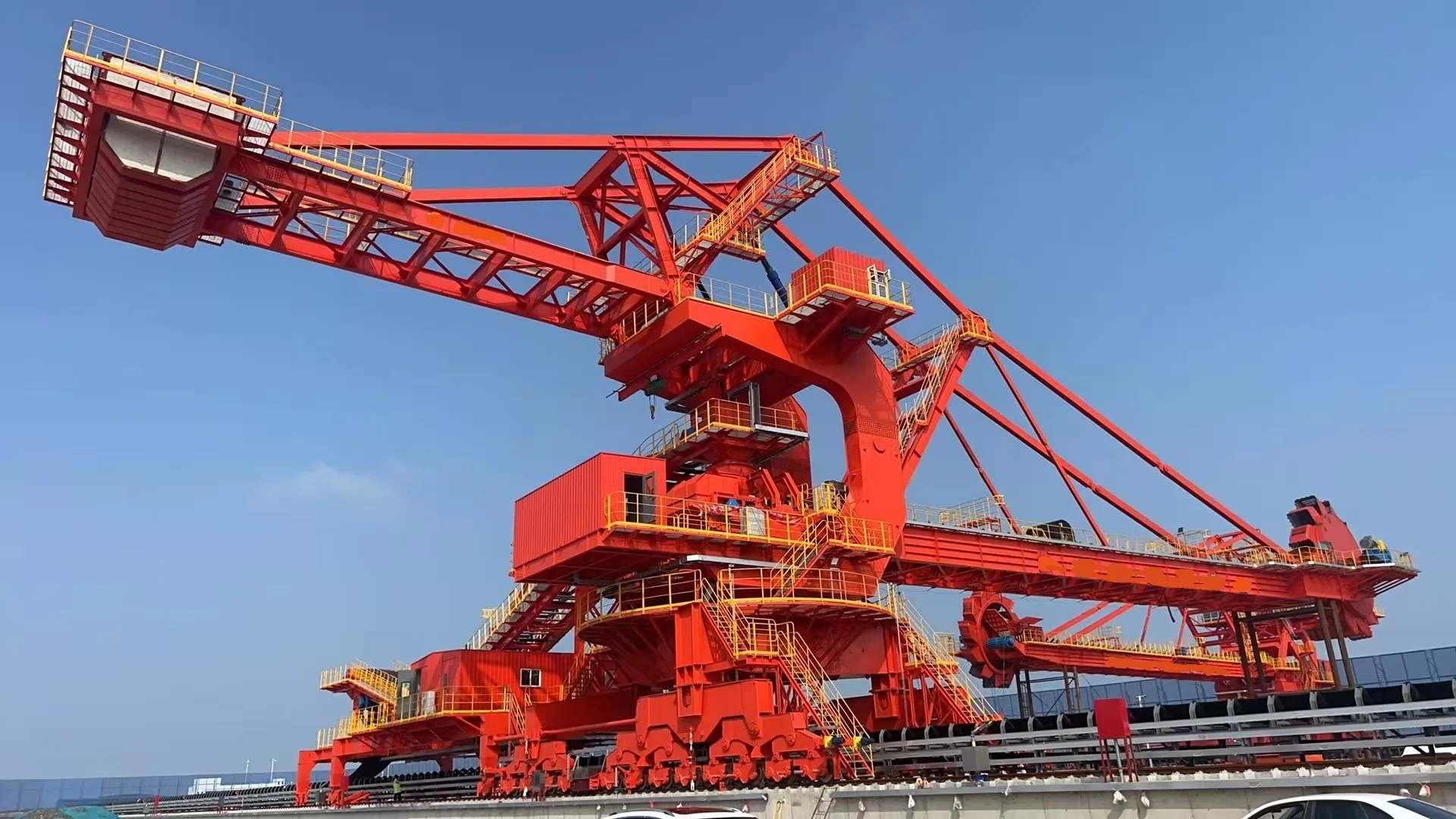


En el siglo XXI, el desarrollo de infraestructuras se ha convertido en la plataforma primordial para el desarrollo nacional y el crecimiento económico. Entre todos los sistemas de infraestructura, la construcción de puentes es considerada un poderoso símbolo del avance tecnológico y del progreso social. Conecta ciudades, facilita la logística y redefine la forma en que se lleva a cabo la integración regional. Sin embargo, cada emprendimiento que establece récords o triunfo estético está oculto por un poder desconocido: Equipos para la construcción de puentes. Desde lanzadores de vigas hasta elevadores de segmentos, desde gatos hidráulicos hasta sistemas inteligentes de monitoreo, estas máquinas no solo determinan cómo se construyen los puentes, sino también cuán seguros, sostenibles y eficientes pueden ser. El equipo de construcción de puentes utilizado para erigir puentes ya no está compuesto por herramientas pesadas, sino que constituye el núcleo tecnológico que permite a los ingenieros ampliar los límites del diseño estructural, asegurando que las infraestructuras modernas sean más precisas, automatizadas y respetuosas con el medio ambiente.
La evolución del equipo de construcción de puentes
De la elevación manual a los sistemas automáticos
Al principio, la construcción de puentes dependía principalmente del trabajo humano y de la asistencia mecánica. Los empleados utilizaban grúas y soportes temporales para ensamblar los componentes, lo que limitaba la velocidad de construcción y aumentaba los riesgos para la seguridad.
La implementación de maquinaria automática para la construcción de puentes a mediados del siglo XX cambió este panorama. Herramientas especializadas como los lanzadores de vigas, que preceden a la instalación de segmentos prefabricados, y los viajeros que se colocan in situ marcaron un punto de inflexión significativo.
Los sistemas modernos han integrado control hidráulico, un mecanismo de servocontrol y sensores digitales que permiten una precisión milimétrica en situaciones de carga dinámica. Estas mejoras reducen el error humano, disminuyen los materiales desperdiciados y aumentan la productividad.
Integración de tecnologías digitales
El equipo central que define la construcción moderna de puentes
Sistemas de lanzamiento de vigas
Viajeros de encofrado para puentes atirantados
Elevadores de segmentos y lanzadores de vigas
Soporte temporal y sistemas de jacking
El papel de la automatización y la inteligencia artificial
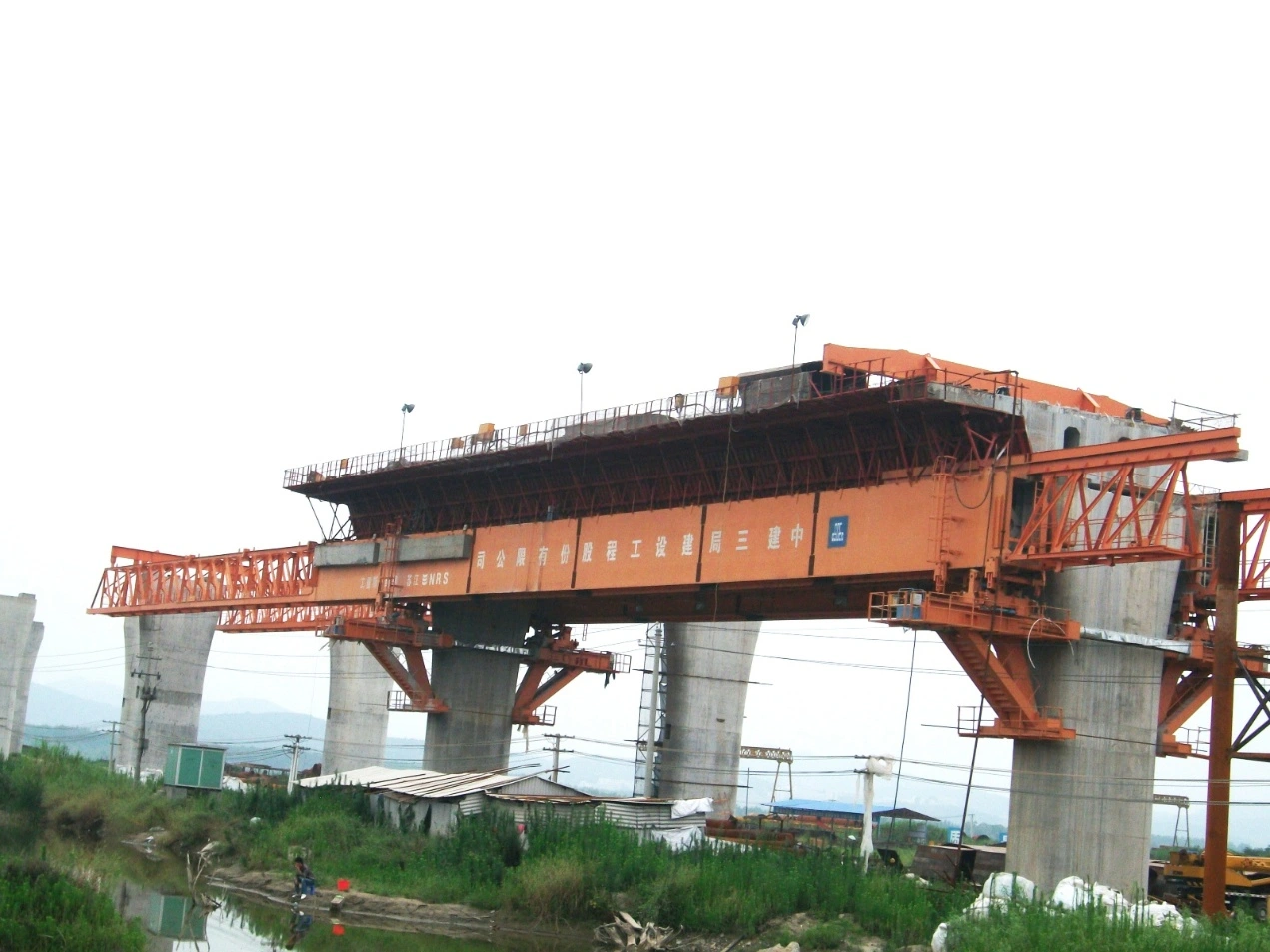
Modern launching girders are built with modular truss configurations, hydraulic systems for synchronization, and automated alignment correction. They can adapt to different span configurations, including continuous beam bridges and curving viaducts.
The implementation of self-propelled launching devices has led to a greater degree of efficiency in construction. By combining a self-balancing controller and a position sensor, they can transition and place segments without additional cranes – this is a significant advancement for projects in difficult terrain.
Form Travelers for Cable-Stayed Bridges
Form travelers are crucial to creating cable-stayed or arch bridges that are supported by their own wire. Modern advanced models now have lightweight alloys with high strength and a hydraulic system that controls the formwork, which enables faster segment composition and curing.
Engineers can precisely alter the deck’s position during the cast using a computer-operated hydraulic system. This system will ensure that the position is accurate despite being employed at heights of over 100 meters.
Segment Lifters and Beam Launchers
When building precast partial bridges, segment lifters have a significant role in raising and placing large precast components.
High-capacity lifters with automated hoisting systems that are now available allow for smooth movement control, which diminishes the vibrations and prevents small cracks in the concrete from forming.
Similarly, beam launchers that have both tilt and rotation capabilities deal with heavier girders that span a variety of lengths, which ensures a quicker delivery of projects.
Temporary Support and Jacking Systems
Hydraulic jack systems, temporary piers, and bearing installation tools have become more complex, which allows for seamless integration and load transmission.
Smart jack systems that contain load cells can automatically adjust the pressure balance. This is important for ensuring a uniform distribution of pressure across multiple points in support – it’s crucial to high-speed rail or large-span bridges.
The Role of Automation and Artificial Intelligence
Predictive Maintenance and Fault Detection
AI and machine learning have become part of the world of bridge construction machinery in the form of preventative maintenance. Sensors acquire data that provides information about operational issues, such as the temperature of oil, vibrations, and stress levels. These are all inputted into AI programs that identify potential problems before they occur.
This method reduces downtime, improves the maintenance schedule, and extends the life of the equipment. For instance, hydraulic actuators that have an anomalous detection system can correct themselves or issue alerts when pressure is out of balance.
Autonomous Operation and Remote Control
The next evolution step is the construction of remote-controlled and autonomous bridges.
Through LiDAR mapping, GPS guidance, and 3D modeling in combination, robotic systems can now conduct automated verification of alignment and positioning.
This decreases the necessity of workers in high-risk areas, which increases safety while still maintaining accuracy.
In larger projects that are autonomous, the equipment will have a fleet of its own, which will be led by a digital platform that is central to the project. This will allow for a fully automated assembly of the bridge.
Sustainability and Energy Efficiency in Equipment Design
Green Manufacturing and Recyclable Materials
The next evolution step is the construction of remote-controlled and autonomous bridges.
Through LiDAR mapping, GPS guidance, and 3D modeling in combination, robotic systems can now conduct automated verification of alignment and positioning.
This decreases the necessity of workers in high-risk areas, which increases safety while still maintaining accuracy.
In larger projects that are autonomous, the equipment will have a fleet of its own, which will be led by a digital platform that is central to the project. This will allow for a fully automated assembly of the bridge.
Energy-Saving Hydraulic Systems
Hydraulic systems account for a large portion of the total energy consumed by bridge construction machines. The implementation of variable displacement pumps, energy recovery circuits, and electro-hydraulic proportional valves decreases power loss by as much as 30% and increases efficiency by as much as 30%.
These innovations not only lower the cost of operation but also correspond with global goals of carbon neutrality, which ensures that bridge construction has a positive impact on sustainable development.
Enhancing Safety and Quality Control
The safety of the bridge is the most important aspect of its construction. Modern equipment features multiple safety layers, including load monitoring, emergency brake, and structural health monitoring.
Digital twin technology facilitates a comparison of design models and constructed structures that is real-time and detects discrepancies early on in the process.
For instance, form travelers now utilize dual path redundancy, which ensures that even if one hydraulic circuit is lost, the structure is still stable.
The degree of engineering redundancy is crucial to ensuring that bridge construction equipment maintains the highest safety standards possible.
Global Trends and Market Outlook
The worldwide market for bridge-building supplies is growing alongside large projects in Asia, the Middle East, and Europe.
Countries like China, India, and Saudi Arabia are committing funds to build high-speed rail and expressways; these countries require advanced equipment that can be rapid, precise, and environmentally responsible.
Se espera que la creciente popularidad de los sistemas modulares de puentes y los métodos prefabricados de construcción aumente la demanda de tecnología combinada que levante y transporte mercancías.
Los fabricantes están ofreciendo cada vez más soluciones que no requieren configuración adicional, tienen una sola instalación y pueden ser mantenidas por la comunidad global.
Direcciones futuras: Inteligente, adaptativa y sostenible
El futuro del equipo para la construcción de puentes estará definido por tres pilares:
-
Automatización inteligente:
AI-driven systems capable of autonomous operation, self-diagnosis, and cloud-based collaboration across global sites. -
Adaptive Engineering:
Equipment that can automatically reconfigure its structure for variable-span or curved bridges, supported by real-time structural analysis. -
Sustainable Development:
Integration of green materials, renewable energy systems, and eco-friendly design principles to minimize environmental impact.
By 2035, we can expect fully intelligent bridge construction platforms — combining robotics, 5G communication, and AI — enabling remote, safe, and precise construction even in the most challenging environments.
Building the Future, One Span at a Time
The equipment used in bridge construction is more complex than the mechanical parts alone. It represents the combination of engineering, knowledge, and sustainability – three powers that move forward the modern infrastructure.
From the precise launching of the girder to the AI system’s insightful predictions, each component has a role in determining the skylines of tomorrow.
As countries continue to devote funds to improving connectivity and resilience, bridge-building equipment will still be at the forefront of this transformation – not only to create physical links between lands, but also to facilitate technological advances that will lead to a more intelligent and more sustainable world.