
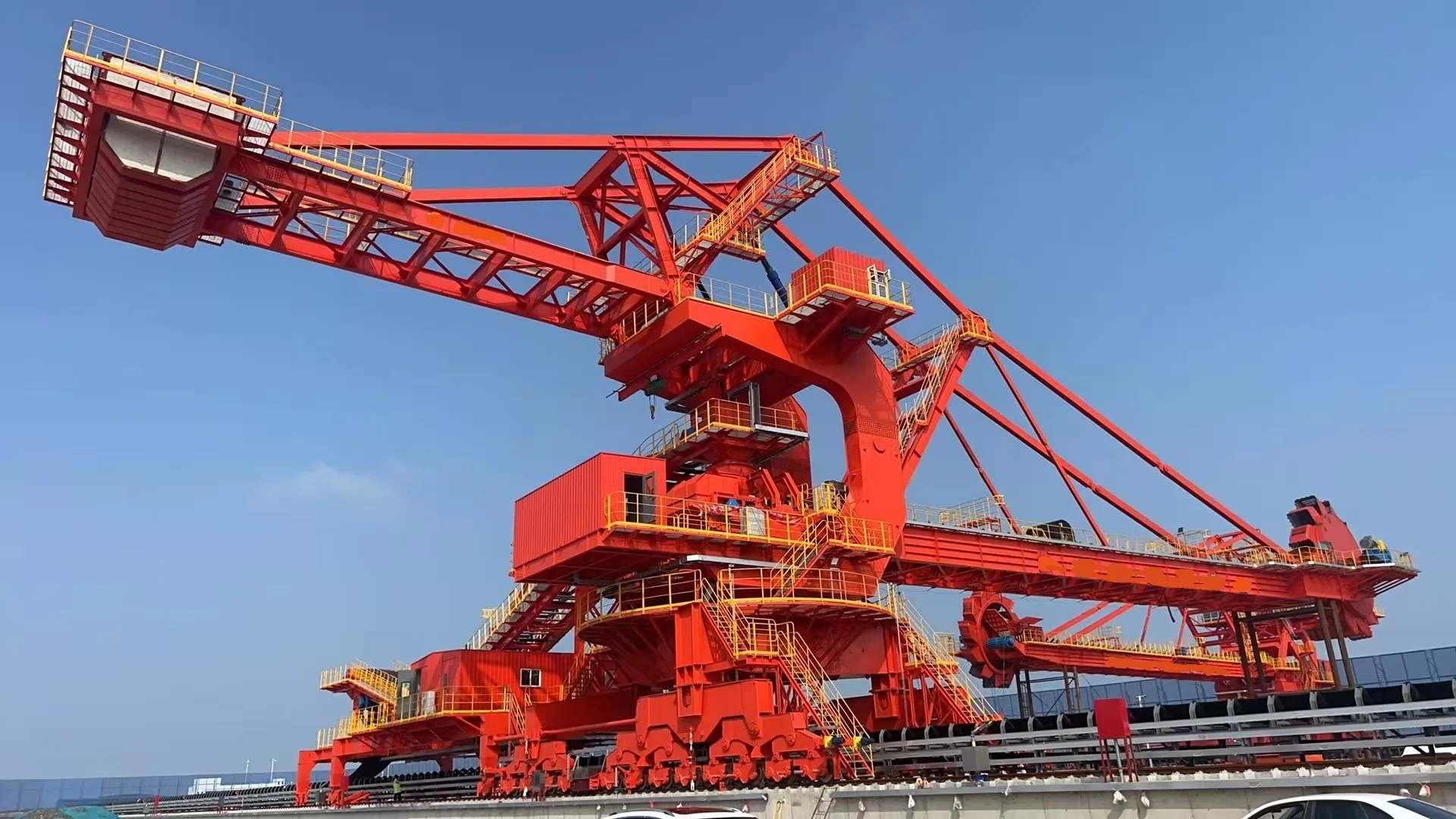


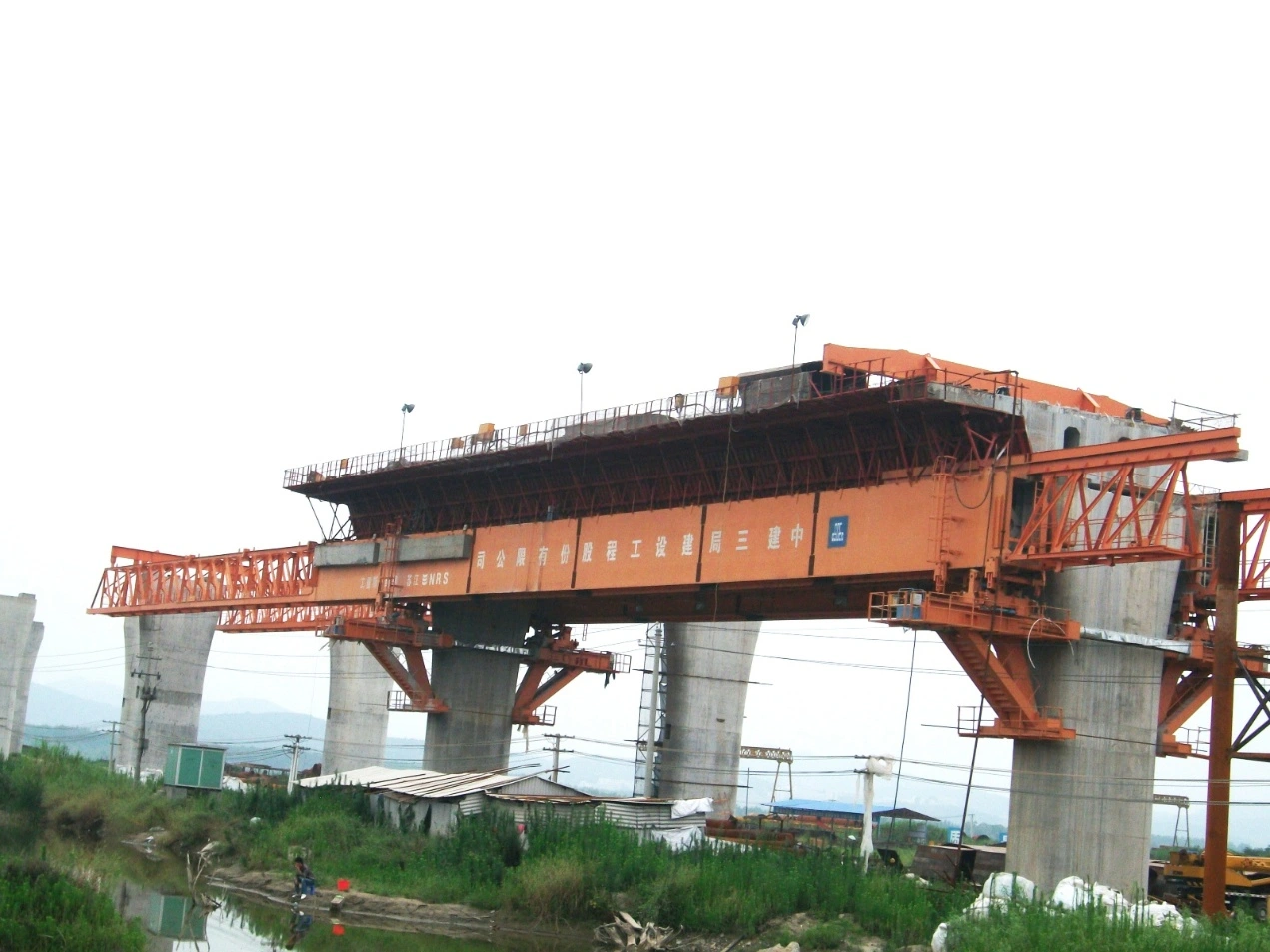

Cable cranes specialize in the lifting of large infrastructure projects that are unable to be accomplished using conventional methods. They’re typically associated with projects that have a long span, such as dam building, and other activities that necessitate precise material movement over great distances and difficult terrain.
Unlike mobile cranes or tower cranes, cable cranes utilize suspended cable systems instead of solid booms. This primary difference enables them to cross rivers, valleys, and construction areas without taking up ground space below them. This is beneficial in situations where access is limited or the structural capacity is high.
Structural Principle and Working Mechanism of Cable Cranes
At the core, cable cranes are composed of load-bearing cables that are suspended between towers or other anchor points, along which a trolley system moves to transport heavier loads. The crane’s operating space is a three-dimensional volume that is defined by the cable’s span, trolley’s travel, and hoisting motion.
Key Structural Components of a Cable Crane System
-
The main load-bearing cables are responsible for carrying the weight of materials
-
Towers or pylons that provide elevation and structural support
-
Trolley and hoisting mechanism enabling horizontal and vertical load movement
This configuration allows cable cranes to lift and position materials with high precision, even across spans exceeding several hundred meters.
Why Cable Cranes Are Essential for Long-Span Bridge Construction
In projects that span a long distance, especially those that cross the ocean or have a canyon as their traverser, the environmental context is unique. Water depth, wind, navigation, and environmental protection are often factors that prevent the conventional use of lifting equipment.
Cable cranes have a successful reputation in these situations because they operate over the course of cable, which minimizes the interference of traffic in the marine environment or ground-based activities. They facilitate the transport of material between towers or platforms without the need for temporary roads or floating cranes.
In large suspension and cable-stayed bridges, cable cranes are frequently employed to transport segments of steel, pre-fabricated decks, reinforcing cages, and formwork units.
Precision and Load Control Capabilities
One of the most notable benefits of cable cranes is their exceptional ability to control the load. Through the use of a centralized system to control the speed of hoisting, the trolley’s travel, and the tension of the cable, operators can position loads with a centimeter of precision over greater distances.
Modern cable cranes have advanced control technology that enables smooth acceleration, deceleration, and suppression of sway. This is of special significance when dealing with oversized or heavier components that are vulnerable to dynamic pressure.
Load Handling Advantages in Cable Crane Operations
-
Stable lifting performance over ultra-long spans
-
Reduced load sway compared to free-hanging crane systems
-
Precise placement of components in confined or elevated locations
These characteristics significantly improve construction safety and installation quality.

Adaptability to Harsh and Complex Environments
Cable cranes are specifically engineered to perform in environments where terrain, weather, or site conditions are unfavorable. Mountainous regions, deep valleys, offshore construction zones, and seismic areas all benefit from the adaptability of cable crane systems.
The main structural elements are typically designed with high safety factors and corrosion-resistant materials, enabling long-term operation in marine or high-humidity environments. Wind-resistant design is also a critical consideration, as cable cranes often operate at significant heights above ground or water.
Installation and Commissioning Considerations
Installing a cable crane is a complex engineering task that requires detailed planning and precision execution. The alignment of towers, tensioning of cables, and calibration of control systems must all be performed within strict tolerances.
Critical Steps in Cable Crane Installation
-
Foundation construction and tower erection
-
Cable stringing, tensioning, and load testing
-
Control system calibration and trial operation
Once commissioned, the cable crane becomes a central logistics system for the entire construction phase, often operating continuously for months or even years.
Integration with Modern Digital Control Systems
Today, contemporary cable cranes that are contemporary are not purely mechanical anymore. They are profoundly involved with digital platforms that enhance efficiency, safety, and monitoring.
These systems facilitate real-time monitoring of the position of the load, the tension of the cable, the wind speed, and the status of operation. Automated safety protocols can activate alerts or reduce the volume when conditions are exceeded by a predefined number.
For large projects that require infrastructure, this degree of digital integration increases communication between construction teams and decreases the probability of operational mistakes.
Economic and Project-Level Benefits
Although cable cranes represent a significant initial investment, their long-term economic value is substantial. By enabling efficient material transport in otherwise inaccessible areas, they reduce reliance on temporary infrastructure and alternative lifting methods.
From a project management perspective, cable cranes help shorten construction schedules, improve workflow continuity, and reduce labor intensity. These benefits often outweigh the upfront cost, particularly in mega-projects where delays can be extremely expensive.
Typical Applications Beyond Bridge Construction
While cable cranes are most commonly associated with bridge engineering, their application scope extends beyond this field. They are also used in large dam projects, power station construction, and certain mining or industrial installations where wide-span lifting is required.
In all these scenarios, the defining advantage remains the same: the ability to move heavy loads accurately across long distances without ground-based constraints.
The Role of Cable Cranes in Future Infrastructure Development
As infrastructure projects become larger and more complex, the demand for effective, high-capacity lifting solutions will increase. Cable cranes have a successful reputation due to their capacity to meet these requirements because of their scalability, flexibility, and compatibility with advanced technology.
Future iterations are likely to involve increased automation, enhanced wind resistance, and improved energy efficiency, all of which will further enhance the role of cable cranes in the future of construction.
Cable cranes aren’t just mechanical lifters; they are also strategic systems that allow for ambitious projects that can be accomplished. By overcoming limitations on space, providing precise control of load, and operating successfully in adverse environments, they allow other equipment to fail.
For large-scale projects that require a lot of infrastructure, especially long-span bridges and complex terrain, cable cranes are still one of the most effective and technologically advanced solutions for material transportation today.