

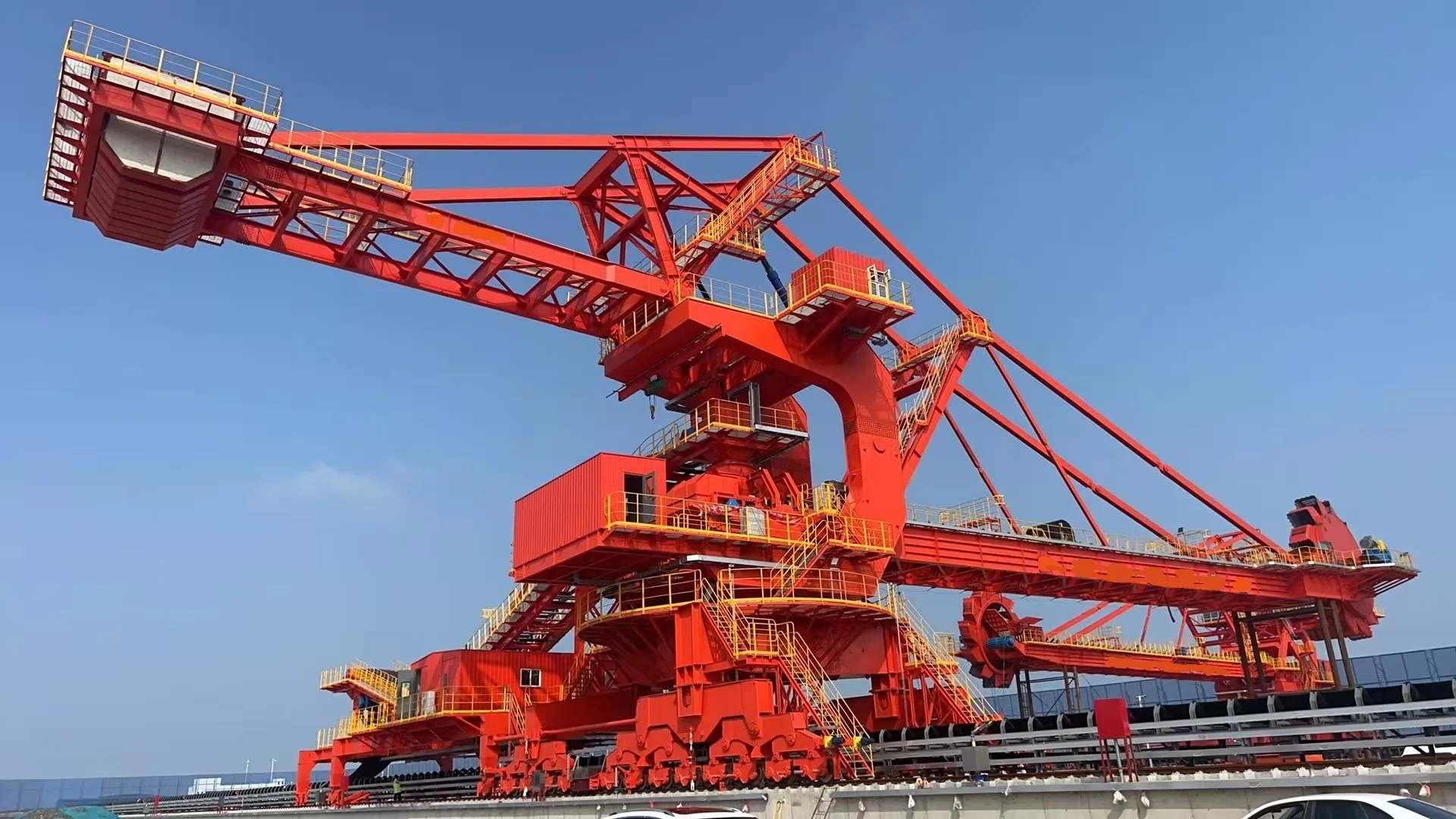

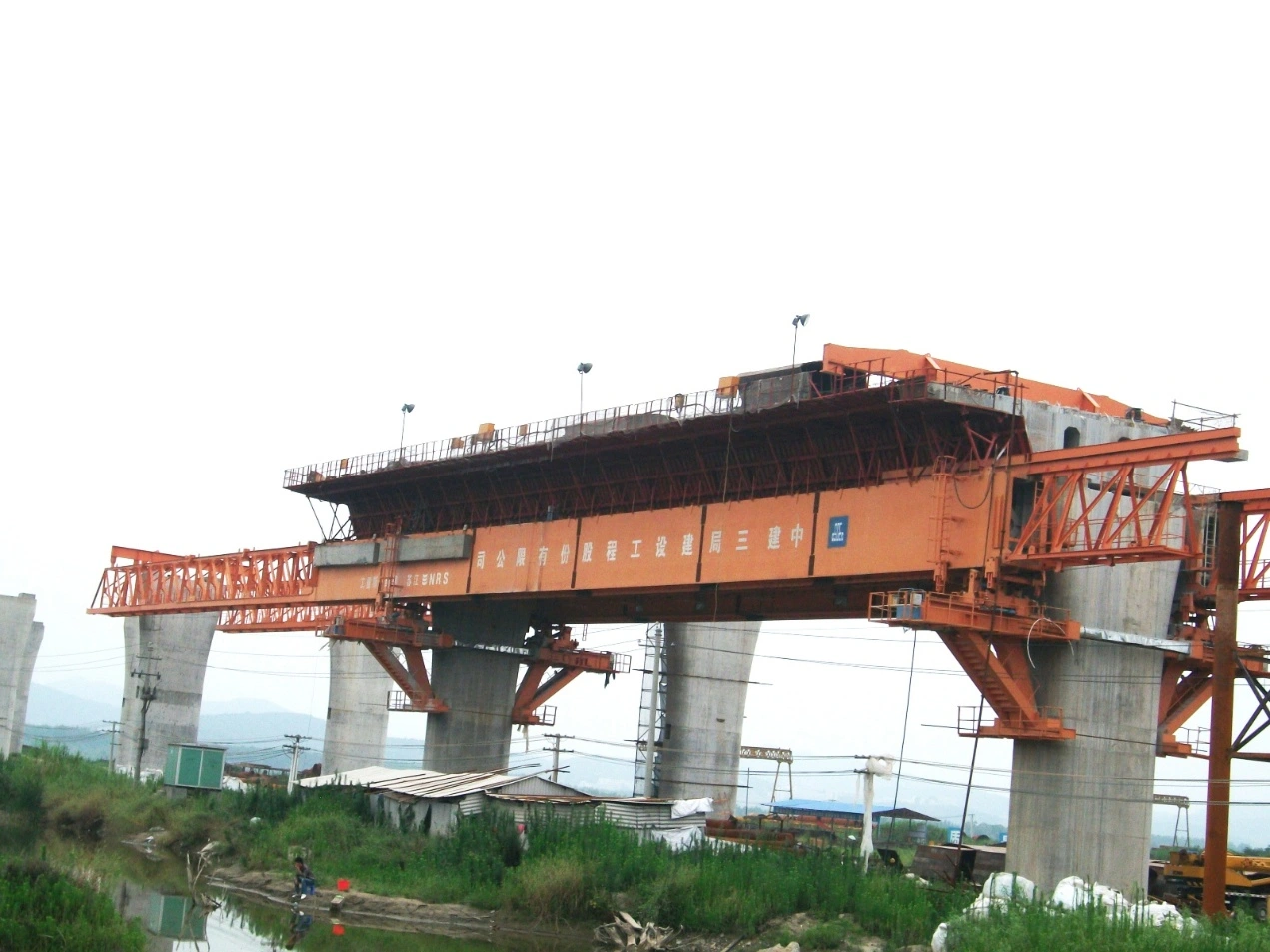

In bridge building, the selection of equipment is typically not based on the greatest power or familiarity with the machine. It’s concerned with choosing the method that will survive in the real world- constraints on terrain, safety, schedule, regulatory concerns, and cost are all real-world issues. This is why, in modern bridge projects, it is more popular to use launching galleries than traditional cranes or full systems of support.
The debate isn’t about whether or not cranes or scaffolding are capable. Many things are theoretically possible. The actual question is whether or not these alternatives are still viable once a project has moved from concept to reality. The practice of launching gantries has become the most popular solution to a set of problems that other methods fail to address simultaneously.
Bridge Construction Is a Constraint-Driven Process
The construction of bridges is not possible in factory conditions that are controlled. It occurs above waterways, roads, railroads, urban areas, valleys, and occasionally active fault zones. Every endeavor has its own combination of impediments, and these impediments have a greater effect on the strategy for construction than what the theory would suggest.
Before comparing erection methods, it is essential to understand what modern bridge projects typically face:
-
Increasing span lengths and segmental construction
-
Limited ground access beneath the bridge alignment
-
Height restrictions and safety regulations
-
Pressure to shorten construction schedules
-
Environmental and traffic impact limitations
Against this backdrop, the selection of erection equipment becomes a question of adaptability rather than raw lifting power.
The Practical Limits of Heavy-Duty Cranes in Long-Span Bridge Projects
Large cranes are often the first alternative considered. They are familiar, flexible, and widely available. However, when applied to long-span or elevated bridge construction, their limitations become apparent very quickly.
Ground Dependency and Access Requirements
Cranes are completely dependent on the ground’s conditions. They necessitate platforms that are stable not only regarding their weight, but also regarding dynamic pressure during crane operations. In many instances, especially in projects that cross rivers, highways, or urban paths, these conditions are not present.
Even when temporary foundations are possible, the expense and time needed to create crane pads often exceed the expense of alternative systems for erection. In areas with steep or soft soil, this difficulty is exacerbated.
Conversely, launching gantries are autonomous systems that originate from the completed parts of the bridge. Once they’re installed, they have a largely independent association with the ground below, which is beneficial in confined environments.
Reach and Stability Constraints at Height
As the height of the bridge’s piers increases and the span length increases, the capacity of the crane to support the structure declines markedly. The capacity tolift things decreases with the distance from the center, and the stability becomes more difficult to maintain. Also, the sensitivity to wind increases at high elevation, which results in frequent pauses in the work.
Conversely, launching gantries are intended specifically for operations that are elevated. Their paths of loading are perpendicular to the bridge’s structure, which allows for controlled, planned movement at a significant elevation. This alignment diminishes the need for external assistance and increases operational stability.
Interrupted Construction Flow
Cranes are tools that are used regularly. They carry, place, and depart. Each lift is set up with care and coordination, and there are often temporary restrictions on the surrounding area. In areas with congestion or urbanization, this can lead to an inconsistent construction timetable and misused labor.
The launching of gantries facilitates the continued cycle of construction. Every segment can be positioned using the same system without necessitating the relocation of equipment. This continuity has a direct effect on schedule stability, which is more important than the theoretical speed of study.

Why Full Scaffolding Systems Struggle in Modern Bridge Construction
Full scaffolding, or falsework systems, have long been used in bridge construction. For low-level bridges over open ground, they remain viable. However, as project complexity increases, their limitations become increasingly difficult to ignore.
Structural and Geographical Impracticality
Scaffolding systems rely on vertical supports from the ground to the bridge deck. This immediately creates problems in locations such as:
-
Deep valleys or ravines
-
River crossings with fluctuating water levels
-
Active roadways or rail corridors
-
Environmentally protected zones
In such conditions, constructing full-height scaffolding is either prohibitively expensive or outright impossible. Even when feasible, the time required for erection and dismantling often exceeds acceptable project timelines.
Launching gantries eliminate this dependency by operating above the ground, supported by the bridge itself.
Environmental and Regulatory Challenges
Modern infrastructure projects are governed by stringent environmental regulations and safety rules. Scaffolding systems typically require a lot of ground preparation, temporary foundations, and long term occupation of the site.
This can lead to regulatory slowdowns, environmental mitigation efforts, and public opposition, this is especially true of urban areas or areas that are environmentally sensitive.
The launching of gantries is intended to minimize the ground’s involvement. Their footprint is primarily restricted to the tops of pier’s walls and the alignment of decks, this reduces the environmental impact of the project andsimplifies the process of regulatory approval.
Limited Adaptability to Span Variations
Bridges are rarely uniform. Changes in span length, curvature, or elevation can complicate the use of scaffolding systems. Modifying falsework mid-project is costly and disruptive.
Launching gantries, particularly modular or adjustable designs, can accommodate such variations more easily. This adaptability is critical in complex alignments where uniform solutions fail.
Launching Gantry as a Problem-Solving System, Not Just Equipment
What sets launching gantries apart is not just their mechanical design, but their ability to address multiple constraints simultaneously. They are not a single-purpose lifting device, but a comprehensive erection system.
Independence from Ground Conditions
One of the most significant advantages of launching gantries is their operational independence. Once installed, they move with the project, span by span, without requiring new foundations or access roads.
This independence enables construction in locations that would otherwise require extensive temporary works, dramatically reducing both cost and risk.
Enhanced Safety Through Controlled Load Paths
Safety in bridge construction is closely tied to load control. Launching gantries offer predictable, enclosed load paths that reduce exposure to dynamic forces and external variables.
Because loads are supported directly by the structure under construction, risks associated with swinging loads, unstable ground, or sudden weather changes are reduced.
This inherent safety advantage is one of the key reasons launching gantries are increasingly favored in high-risk projects.
Continuous Construction and Schedule Reliability
From a project management perspective, consistency matters more than peak performance. Launching gantries enable a repetitive, standardized erection process that improves planning accuracy and resource allocation.
This consistency reduces downtime, simplifies coordination, and supports lean construction principles. In large-scale projects, the cumulative impact on schedule reliability can be decisive.
Comparing Methods Through the Lens of Safety, Continuity, and Environmental Impact
When evaluated purely on lifting capacity, cranes may appear competitive. When evaluated on initial cost, scaffolding may seem economical. However, modern bridge projects demand a broader assessment framework.
Launching gantries outperform alternative methods when evaluated across multiple dimensions simultaneously:
-
Safety redundancy in elevated operations
-
Construction continuity without repeated setup
-
Minimal interference with traffic and surroundings
This multi-dimensional advantage explains why launching gantries are often selected even when other methods remain technically feasible.
Decision-Making in EPC and Tender Contexts
In EPC contracts and international tenders, equipment selection is scrutinized not only for feasibility but also for risk allocation. Contractors must demonstrate control over safety, schedule, and environmental impact.
Launching gantries offer a compelling narrative in this context. They signal technical maturity, risk awareness, and long-term planning capability. This perception can influence tender evaluations as much as quantitative metrics.
Long-Term Cost Perspective: Beyond Equipment Price
While the cost of launching gantries is higher in advance, the impact on the entire project’s cost is often disregarded. Reduced project duration, fewer deadlines, and enhanced safety records have a direct effect on savings that can be measured over the life of a project.
Cranes and scaffolding are purported to be less expensive than other methods, but their concealed costs—delay, regulation, risk, and mobilization—are frequently more significant than the initial savings reported on paper.
Global Trends Reinforcing the Shift Toward Launching Gantries
All over the world, infrastructure projects are growing in scope, complexity, and regulation. This trend promotes methods of construction that are stable and versatile.
The launching of gantries concords with these requirements. Their adoption is particularly extensive in high-speed rail, urban viaducts, and long-span highways, where conventional methods are unable to keep up with the modern requirements.
Why the Preference Is Structural, Not Situational
The desire to utilize galleries to launch projects over alternatives, such as cranes or scaffolding, is not due to fashion or technological advancement. It’s derived from structural alterations to the way bridges are constructed, regulated, and designed.
The success of launching gantries is attributed to their addressing of the realities of modern bridge construction: restricted spaces, elevated dangers, demanding hours, and stringent environmental regulations. In this context, other methods are not necessarily incorrect, but they are often lacking.
For those in charge of engineering and decision-making, the choice of a launching platform is primarily a choice of control. Control over safety, control over duration, and control over complexity. Also, in today’s infrastructure projects, control is the most important resource.