



Innleiing
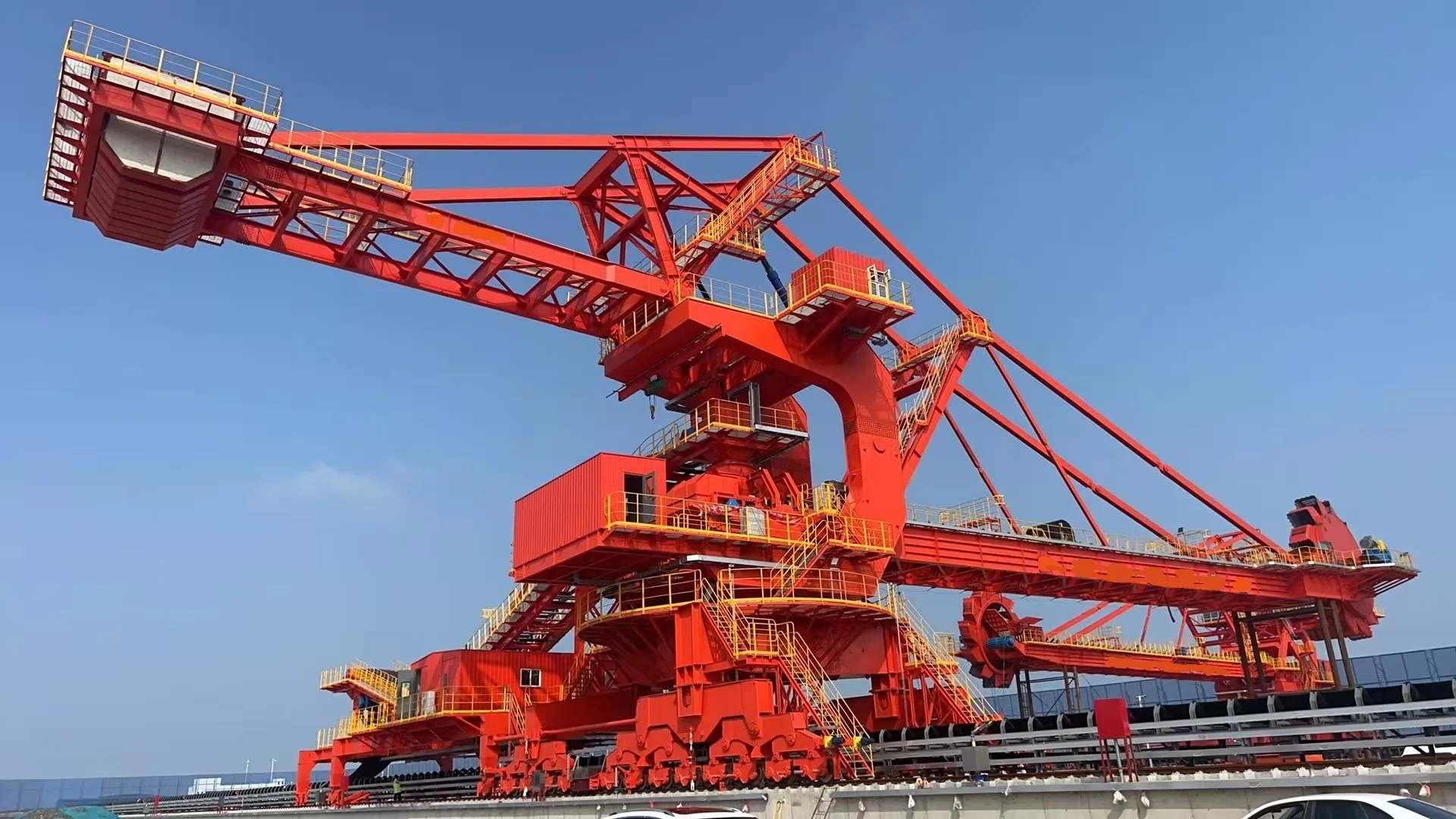
Delays and safety risks on bridge projects can disrupt traffic, frustrate communities, and inflate costs. An Integrated Bridge Launcher tackles these challenges by shortening timelines, improving safety, and ensuring higher-quality results.
Traditional construction relies on cranes, scaffolding, and manual assembly, exposing workers to hazards and causing unpredictable schedules. By combining transport and erection in a single system, the Integrated Bridge Launcher streamlines operations, reduces risks, and makes every stage—from first beam to final span—faster, safer, and more efficient.
The Core Problem: Why Traditional Bridge Erection Slows You Down
Traditional bridge erection relies on a fragmented approach. Cranes must be moved and repositioned repeatedly. Scaffolding and falsework require extensive assembly time. Separate transport vehicles carry girders to the site, then different equipment handles lifting and placement. Each transition between these steps introduces delays, coordination challenges, and safety risks.
A crane-based operation demands clear ground access, level surfaces, and careful load management. On uneven terrain or over water, crane access becomes either impossible or prohibitively expensive. Workers must operate in proximity to suspended loads, and each lift carries the potential for catastrophic failure if something goes wrong.
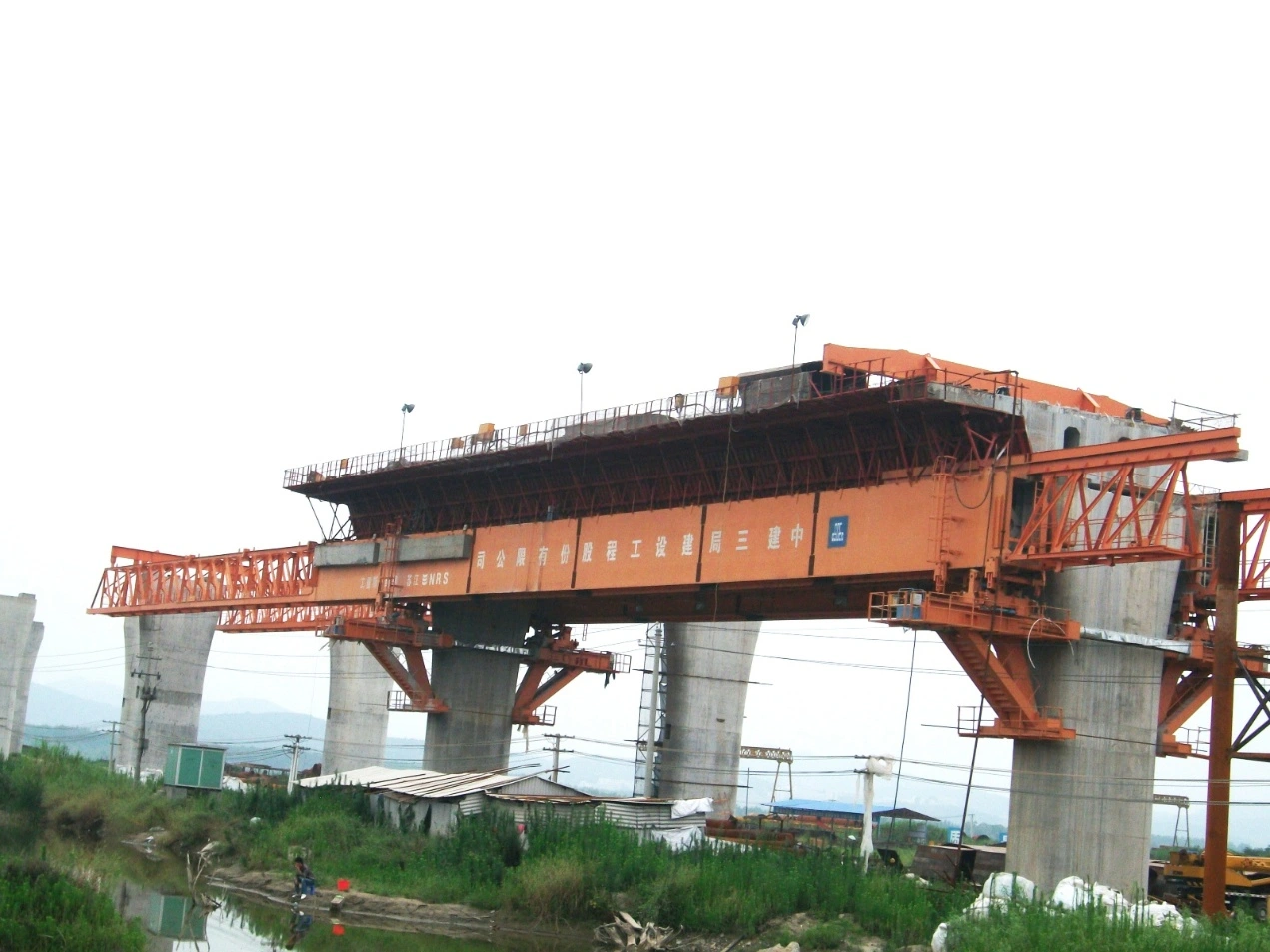
By contrast, an Integrated Bridge Launcher operates from the bridge deck itself. It moves forward under its own power, launches girders into position without external lifting aids, and self-launches to the next span without disassembly. The result is a continuous, efficient workflow that reduces both time and exposure to hazards.
Field engineer note: “On our last curved viaduct project, shifting from three cranes to one launcher cut our coordination meetings from daily to weekly. The crew actually looked forward to each launch because it became routine.”
How an Integrated Bridge Launcher Delivers Speed and Safety
Construction often treats speed and safety as a trade-off—faster work can cut corners, while strict safety slows progress. An Integrated Bridge Launcher eliminates this conflict.
Speed comes from integration: it combines transport and erection in one machine, moving beams directly from the yard to piers in a single, continuous operation. Fewer handling steps and no crane repositioning let crews complete more spans per shift.
Safety comes from automation and remote control. Hydraulic systems with PLC monitoring manage lifting and positioning from a distance, automatically stopping if parameters exceed safe limits, keeping workers out of danger.
Predictability enhances both. Standardized, repeatable operations reduce errors, prevent delays, and maintain consistent performance across every span.
Key Technical Features That Drive Faster and Safer Construction
An Integrated Bridge Launcher is not simply a large crane on rails. It incorporates sophisticated engineering that directly addresses the specific demands of modern bridge construction.
Main Girder and Front Guide Girder
The main girder forms the structural backbone of the launcher, bearing the weight of each beam during transport and placement. The front guide girder extends ahead of the launcher to reach the next pier, spanning the gap and providing a stable platform for beam positioning. This dual-girder design eliminates the need for intermediate supports and allows the machine to cross spans up to its rated length without additional temporary structures.
Hydraulic Lifting and Traveling Systems
The hydraulic system powers leg lifting, beam hoisting, and transverse movement, providing smooth, precise control of every operation. Modern systems deliver substantial force. For example, Enerpac’s Enerlauncher system provides a total lift force of 1,600 tons per unit and a pushing force of 600 tons, all managed through automated PLC control.
The traveling system, comprising front, middle, and rear support legs, moves the launcher along the bridge deck or track after each span is completed. The machine walks itself forward, meaning no external transport equipment is required for repositioning. This self-launching capability is a core advantage of the incremental launching method.
PLC Control and Synchronized Operation
The electronic control system is the brain of the launcher. It coordinates all movements, monitors safety parameters, and provides diagnostic feedback to the operator. Advanced systems can synchronize two or more launcher units working simultaneously, allowing precise steering and alignment of long or heavy bridge sections. This multi-unit synchronization is particularly valuable for wide bridges or those with complex curvature.
Safety Systems
Integrated alarms, emergency brakes, and load sensors continuously monitor operations and provide warnings before conditions become hazardous. Real-time displays show critical parameters such as beam angle, hydraulic pressure, and wind speed, allowing operators to make informed decisions instantly.
How an Integrated Bridge Launcher Compares to Conventional Erection Methods
The table below shows how an Integrated Bridge Launcher stacks up against traditional crane-based erection across the metrics that matter most to project owners and contractors.
| Metric | Crane-Based Erection | Integrated Bridge Launcher |
|---|---|---|
| Average spans completed per day | 1–2 (with multiple crane setups) | 4–6 (continuous cycle) |
| Workers exposed to the drop zone per shift | 8–12 | 2–3 (remote operation) |
| Equipment repositioning between spans | Requires crane disassembly/reassembly | Self-launches without disassembly |
| Terrain limitations | Requires level ground access | Operates from a completed deck |
| Weather sensitivity (wind) | Critical (shut down at 15-20 mph) | Reduced (shut down at 25-30 mph) |
| Rework rate from placement errors | Moderate (3-5%) | Low (<1%) |
Table ALT text: Comparison table of crane-based erection vs integrated bridge launcher showing speed, safety, and efficiency advantages.
A study comparing bridge erection techniques found that an assembled bridge erecting machine achieved stiffness approximately 1.5 times stronger than standard equipment while cutting manufacturing investment by 50 percent. Another comparison of erection solutions for a major sea-crossing bridge concluded that the large-section incremental launching approach required less temporary structure input, delivered a controllable construction period, and avoided new equipment investment, making it the most economical choice overall.
Real-World Projects: Where Integrated Bridge Launchers Prove Their Value
Numbers on a page are useful, but real construction sites tell the true story. Here are three examples of how integrated launching technology transformed actual projects. Each includes on-the-ground feedback from site personnel.
Project 1: Saudi Red Sea Coastal Bridge
In Saudi Arabia, a custom-designed pile-beam integrated launcher crane was deployed for the Red Sea Laheq Link Road and Cross-Sea Bridge Project. Conditions were punishing: temperatures approached 50°C, combined with geothermal heat and strong winds.
Despite these extremes, the launcher significantly enhanced construction efficiency and safety. A site supervisor recalled: “With traditional cranes, we would have lost at least two hours every afternoon due to heat and wind holds. The launcher kept working because its low-profile design and automated controls reduced manual exposure.” More importantly, the team continuously optimized the construction plan to protect the local mangrove ecosystem, proving that faster bridge erection and environmental responsibility can coexist.
Project 2: Off-Grid Bridge in a Developing Country
In a region with no access to electrical infrastructure or conventional cranes, a contractor used an integrated hydraulic launching system powered by a gas-driven pump to launch a steel bridge. Six hydraulic cylinders distributed the lifting force while providing precise control over descent and forward movement.
The local project manager noted: “We had no crane, no stable ground access, and no grid power. The launcher solved all three problems in one package.” The system required no cranes, operated reliably off-grid, and significantly reduced logistics costs and setup time. This created a replicable model for infrastructure development in remote and low-resource settings.
Project 3: Taohuayu Yellow River Bridge – 50% Cost Saving
Using an assembled bridge erecting machine on the north bridge approach of the Taohuayu Yellow River Bridge, engineers made full use of existing member bars for the machine. The investment in manufacturing new components was dramatically reduced, and the overall cost was saved by 50 percent.
The chief engineer commented, “We retrofitted an older launcher instead of buying new. It ran smoothly on slide boards with easy operation and proven safety and reliability.” This project provides a reference for similar bridge projects worldwide, especially when budgets are tight, but performance cannot be compromised.
Construction Efficiency Gains Backed by Research
Researchers have documented the productivity improvements achievable with modern bridge erection equipment. Incremental launching using integrated systems can achieve an average construction rate of 30 meters per week, significantly faster than conventional cast-in-place methods. This speed advantage becomes decisive when projects face tight deadlines, seasonal constraints, or community pressure to reopen roadways quickly.
The incremental launching method also excels in challenging environments. It has minimal effect on shipping traffic when crossing navigable waterways, requires shorter construction timelines than traditional approaches, and often delivers lower overall costs. With no supporting piers needed in many configurations, the method is widely used for steel and prestressed concrete bridges spanning rivers, valleys, and existing infrastructure.
On the Shenzhen-Zhongshan Bridge, a comparative analysis of erection solutions for steel box girders spanning from anchorage in the sea found that large-section incremental launching required less temporary structure input, offered a controllable construction period, avoided the procurement of new equipment, and delivered the best comprehensive economy of all methods evaluated.
Materials and Design Excellence: What to Look For
Not every Integrated Bridge Launcher delivers the same level of performance. Quality machines share several key design characteristics.
-
High-grade structural steel forms the main girder and support legs. Look for machines built with steel that meets international standards for yield strength and fatigue resistance. This ensures the launcher can handle repeated loading cycles without developing stress cracks or deformation over years of service.
-
Corrosion protection systems are essential, especially for coastal or marine bridge projects. Quality launchers feature multi-layer paint systems, galvanized components on exposed areas, and sealed electrical enclosures rated for dusty and humid environments.
-
Redundant hydraulic circuits provide backup in case of component failure. A well-designed system allows operations to continue even if one pump or valve malfunctions, preventing costly shutdowns and enhancing safety margins.
-
Modular assembly simplifies transport to the job site and speeds up initial setup. Launchers that break down into road-transportable modules can be shipped economically and reassembled rapidly by a small crew.
-
Real-time monitoring of load, position, wind speed, and hydraulic pressure gives operators complete situational awareness. Advanced systems log data for post-operation analysis, enabling continuous improvement of launching procedures.
Hydraulic and Automation Innovations in Modern Launchers
The technology inside modern bridge launchers continues to advance rapidly. Hydraulic systems in 2025 are evolving toward data-driven, automated operation that reduces manual intervention and improves safety.
IoT-enabled components now monitor pressure, temperature, and flow in real time, sending alerts when readings fall outside acceptable ranges. This predictive capability allows maintenance teams to address developing issues before they cause breakdowns, reducing unplanned downtime on critical bridge projects.
Automated control systems with proportional valves and servo-hydraulics optimize flow, pressure, and motion without constant operator input. The results include smoother operation, safer job sites, and reduced wear on hydraulic components. For bridge launchers, this automation means consistent, repeatable beam placement with minimal risk of operator error.
Adaptive hydraulic systems detect load variations mid-operation and adjust pump output and flow to match demand. Instead of running at maximum capacity continuously, the system operates at the ideal point for the current load, reducing energy waste, heat buildup, and component stress. This translates directly to longer equipment life and lower fuel consumption on diesel-powered launchers.
Sustainability features are increasingly standard. Variable-displacement pumps, low-viscosity fluids, and sealed connectors minimize fluid loss and improve energy efficiency. For contractors facing environmental regulations or sustainability mandates, these features help meet compliance requirements while reducing operating costs.
Return on Investment: Calculating the Real Savings
The financial case for an Integrated Bridge Launcher extends far beyond the purchase price or rental cost of the equipment. Multiple factors contribute to the return on investment.
-
Shortened project duration is the most obvious benefit. Completing a bridge weeks or months ahead of schedule reduces general condition costs, lowers financing interest payments, and may trigger early completion bonuses from project owners. For a bridge project valued at 50 million yuan, completing construction two months early can save over 1 million yuan in financing and on-site costs.
-
Reduced labor costs follow from the efficiency of the launcher. Fewer workers are needed on-site, and those who remain face less physically demanding work. The automation of repetitive tasks means crews can focus on quality control and safety monitoring rather than manual lifting and positioning.
-
Lower equipment rental expenses occur because the launcher replaces multiple pieces of equipment that would otherwise need to be leased separately. One integrated machine can eliminate the need for multiple cranes, transport trailers, and support vehicles.
-
Decreased rework costs result from the precision of hydraulic placement. Beams land exactly where they are supposed to on the first attempt. Misalignments that would require expensive corrections are virtually eliminated.
-
An extended equipment lifespan through modern hydraulic and structural design means the launcher remains productive for many projects. Contractors who own rather than rent their launchers see the per-project cost decline over time as the machine is amortized across multiple bridges.
Operational Safety: Key Insights for Project Managers
Research on Accelerated Bridge Construction (ABC) shows that on-site time for bridge replacement can drop from over a year with conventional methods to just a few weeks. This dramatic reduction in exposure is the single most effective way to improve safety—cutting construction time by 90% proportionally reduces accident risk.
Common causes of girder launcher accidents include poor roadbeds, inadequate railway bearing capacity, and design limitations. Modern integrated launchers address these directly with distributed support legs and real-time load monitoring, reducing the risk of overturns.
Human factors—such as insufficient training, low safety awareness, and weak supervision—also contribute to incidents. Automated controls in integrated systems minimize human error, shifting operators from active manipulation to supervisory monitoring, a much safer arrangement.
FAQ
1. How much faster is an Integrated Bridge Launcher compared to crane-based erection?
Field data shows an integrated launcher can complete 4 to 6 spans per day, compared to 1 to 2 spans with conventional crane operations. That is 50 to 70 percent faster overall project completion.
2. Can an Integrated Bridge Launcher work on curved or sloped bridges?
Yes. Modern launchers with synchronized hydraulic systems and multi-leg steering capability handle both horizontal curvature and longitudinal gradients. The PLC control system adjusts each leg independently to maintain proper alignment.
3. What training is required to operate an Integrated Bridge Launcher?
Operators typically need 2 to 4 weeks of specialized training covering PLC control interface, hydraulic system management, safety protocols, and emergency procedures. Many manufacturers provide on-site training as part of equipment delivery.
4. How does weather affect launcher operations?
Integrated launchers are less weather-sensitive than cranes because they operate from the bridge deck rather than ground level. Most systems include wind speed sensors that automatically shut down operations when pre-set limits are exceeded, typically 25 to 30 mph.
5. Is it better to buy or rent an Integrated Bridge Launcher?
This depends on your project pipeline. Contractors with multiple bridge projects over several years generally benefit from ownership, with per-project costs dropping significantly after 3 to 4 jobs. For single projects or first-time users, rental is often more economical.
Conclusion: Faster, Safer Bridge Construction
Bridge construction is demanding, but speed and safety no longer have to compete. An Integrated Bridge Launcher accelerates timelines, enhances safety through automation and monitoring, and reduces costs by minimizing rework and equipment needs.
Whether it’s a highway overpass, railway viaduct, or river crossing, the right launcher transforms how projects are completed—faster, safer, and more efficiently.
Ready to get started? Contact our engineering team to assess your site and recommend the ideal launcher configuration. Call, email, or visit our product page today.