


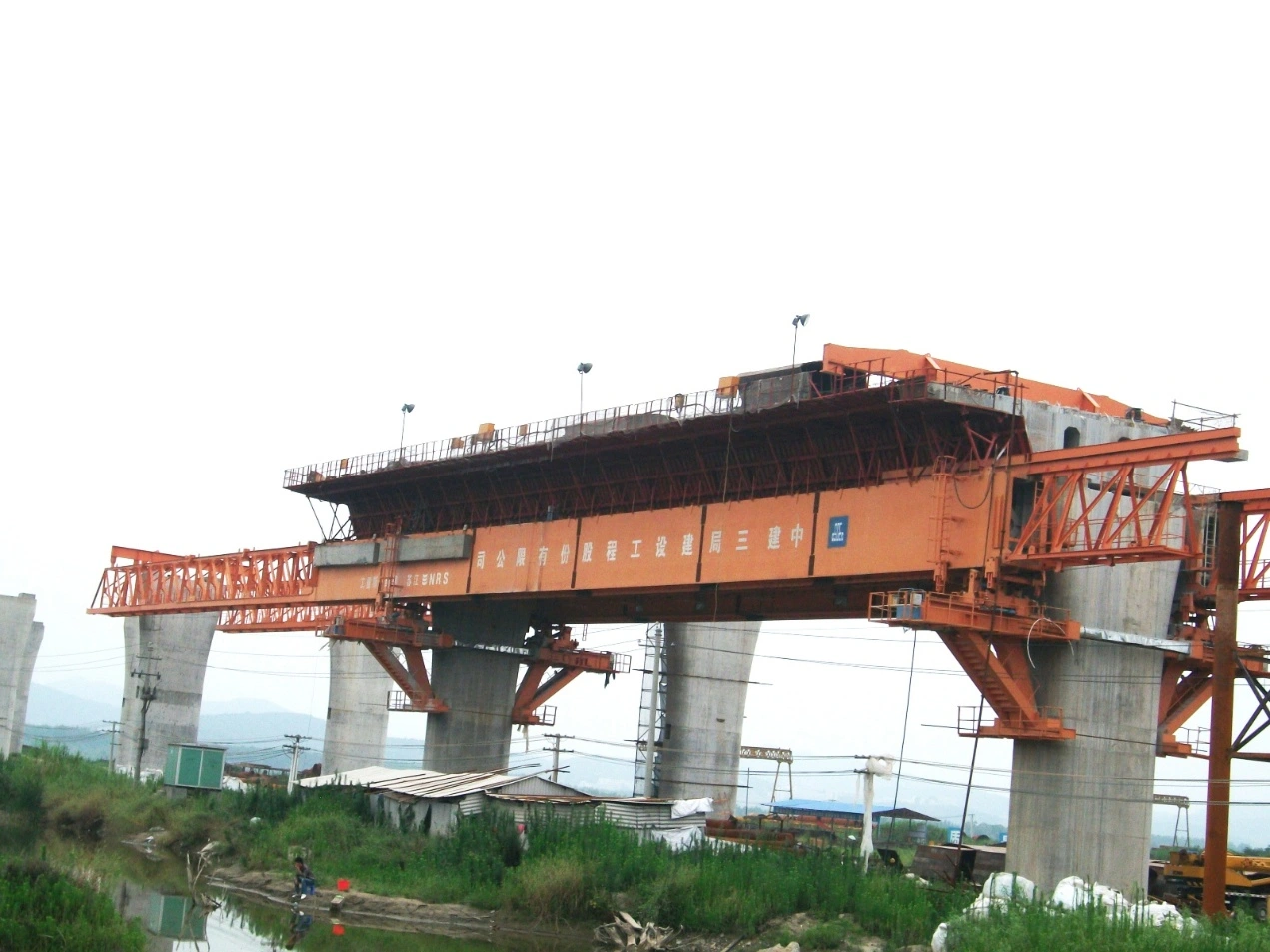

Large bridge projects rarely rely on temporary timber or simple steel supports anymore. Modern infrastructure construction has moved toward sophisticated structural equipment designed to improve efficiency, reduce labor risk, and accelerate project timelines. One of the most important innovations in bridge engineering is the Movable Scaffolding System (MSS).
A movable scaffolding system allows engineers to cast bridge spans in place while the support structure moves forward span by span. This approach dramatically improves productivity, especially in projects involving long viaducts, highway bridges, and high-speed railway structures. However, before selecting or designing such equipment, one critical question must be answered: what determines the load capacity of a movable scaffolding system?
Capacity defines how much weight the system can safely carry during the construction process. That includes not only the concrete being poured, but also reinforcement steel, formwork, construction equipment, and dynamic loads generated during operation. If a system is under-designed, it could lead to structural instability. If it is over-engineered, costs increase unnecessarily, and transportation becomes more complicated.
Understanding the factors that determine MSS capacity helps contractors, engineers, and equipment manufacturers design systems that balance safety, efficiency, and economic practicality. The load capacity of a movable scaffolding system depends on multiple variables, including structural design, material strength, bridge span length, construction loads, hydraulic system performance, and environmental conditions.
Structural Design of the Movable Scaffolding System
The structural design of the movable scaffolding system is the foundation of its load capacity. In essence, the MSS is a large temporary steel structure that must support significant weight while maintaining precise alignment during bridge construction.
The primary structural components typically include:
-
Main load-bearing truss
-
Formwork support frame
-
Hydraulic lifting system
-
Temporary support points
-
Longitudinal launching mechanism
Among these components, the main truss structure is the most important. It carries the majority of the construction load and distributes weight across the system. Engineers usually design the truss using high-strength steel sections arranged in triangular configurations to maximize stiffness while minimizing overall weight.
Truss geometry is carefully calculated so that loads transfer evenly through structural nodes. Uneven load distribution could lead to localized stress concentrations, which may reduce the safety margin of the equipment.
Another key aspect of structural design is deflection control. Even if a system is strong enough to carry the weight, excessive bending could affect the accuracy of bridge construction. For this reason, engineers often design the structure with additional stiffening members to limit deflection during concrete pouring.
The layout of the MSS also depends on whether the equipment is designed for overhead launching or underslung launching, both of which affect structural load distribution.
Structural Steel Materials and Their Influence on Capacity
Material strength plays a crucial role in determining how much load the system can carry. Most movable scaffolding systems are constructed from high-strength structural steel, which provides excellent load-bearing capacity while maintaining durability for repeated project use.
Common materials used in MSS structures include:
-
Q345 structural steel
-
Q355 high-strength low-alloy steel
-
Specialized fatigue-resistant steels
These materials offer higher yield strength compared with standard carbon steel. Higher yield strength means the structure can carry heavier loads without permanent deformation.
Material thickness also affects structural capacity. Thicker steel plates increase strength but also add weight to the equipment. Engineers, therefore, balance strength and weight carefully during the design process.
Another factor is welding quality and joint design. Movable scaffolding systems contain numerous welded joints, particularly at truss nodes. Poor welding or weak connections could become critical failure points under heavy loads.
Because MSS equipment is reused across multiple projects, materials must also demonstrate excellent fatigue resistance. Repeated loading cycles during bridge construction could otherwise weaken structural members over time.
Bridge Span Length and Its Engineering Impact
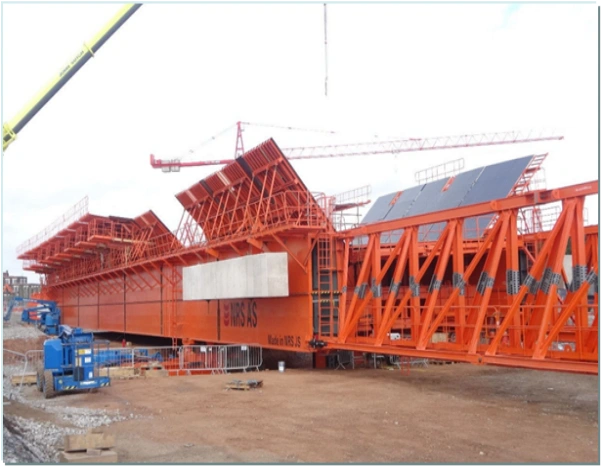
The span length of the bridge under construction significantly influences the required capacity of a movable scaffolding system.
Longer spans generate higher bending moments and shear forces within the supporting structure. As a result, the MSS must be designed with greater strength and stiffness to maintain stability.
Typical MSS applications fall within several span ranges:
| Bridge Span | Typical MSS Design Requirement |
|---|---|
| 25–30 meters | Standard capacity system |
| 30–45 meters | Reinforced structural design |
| 45–60 meters | High-capacity MSS structure |
When span length increases, the main truss must resist higher bending forces. Engineers may compensate by increasing truss depth, adding additional reinforcement members, or adopting twin-girder configurations.
Long spans also increase structural deflection, which must remain within acceptable limits to maintain bridge alignment. Advanced simulation tools such as finite element analysis are commonly used to model these conditions during the design phase.
Construction Loads: Concrete, Reinforcement, and Equipment
During bridge construction, the movable scaffolding system must support several types of loads simultaneously. The most significant is the weight of freshly poured concrete.
Concrete has an average density of approximately 2400 kilograms per cubic meter, making it extremely heavy when cast in large bridge sections. A single span of box girder concrete may weigh several hundred tons.
In addition to concrete, reinforcement steel contributes substantial weight. Reinforcement cages are usually installed before pouring concrete, meaning the MSS must carry this load throughout the entire casting process.
Construction equipment and workers also add dynamic loads. Vibrators used to compact concrete can introduce vibration forces that affect structural stability.
To calculate total construction load, engineers typically consider the following elements:
-
Self-weight of the MSS structure
-
Weight of concrete being poured
-
Reinforcement steel mass
-
Formwork system weight
-
Construction equipment and worker loads
Each of these components is included in the overall design calculation to determine the system’s required capacity.
Hydraulic Lifting and Support Systems
A movable scaffolding system relies heavily on hydraulic equipment to perform lifting, positioning, and launching operations. Hydraulic cylinders support the formwork structure and allow engineers to adjust elevation during construction.
Hydraulic capacity, therefore, directly affects MSS load performance. Each cylinder must be capable of supporting its share of the total construction load while maintaining synchronized movement with other cylinders.
In large systems, multiple hydraulic cylinders operate simultaneously. Sophisticated control systems ensure that load distribution remains balanced across support points. If one cylinder carries an excessive load, structural stress could increase in localized areas.
The support structure beneath the MSS is equally important. The system usually rests on bridge piers or temporary supports. These supports must possess sufficient strength and rigidity to prevent settlement or movement during construction.
Environmental Conditions Affecting Load Capacity
Movable scaffolding systems often operate in challenging construction environments. External factors can influence structural loads and must be considered when calculating system capacity.
Environmental conditions that may affect MSS performance include:
-
Strong wind loads at elevated construction sites
-
Temperature variations cause thermal expansion
-
Seismic activity in earthquake-prone regions
-
Ground stability at temporary support points
Wind is particularly significant for large steel structures. Strong crosswinds can introduce lateral forces that increase stress on the system. Engineers may design additional bracing elements to improve wind resistance.
Temperature changes can also affect structural alignment. Steel expands and contracts with temperature fluctuations, which can influence structural stresses during long construction cycles.
Engineering Calculations and Safety Factors
Safety is the most important consideration in any bridge construction project. Engineers, therefore, apply strict design standards when calculating MSS capacity.
Several types of structural analysis are used during the design process:
-
Static load analysis
-
Dynamic load analysis
-
Wind load calculations
-
Fatigue life evaluation
Designers also apply safety factors to ensure the structure performs reliably under extreme conditions. These safety margins account for uncertainties in construction loads, environmental conditions, and material properties.
Many countries follow national bridge construction codes when designing MSS equipment. These codes specify allowable stresses, load combinations, and structural testing requirements.
Key Factors Engineers Evaluate When Determining MSS Capacity
When designing or selecting a movable scaffolding system, engineers must evaluate several important parameters to ensure the equipment matches project requirements.
Key evaluation factors typically include:
-
Bridge span length and structural layout
-
Total weight of concrete and reinforcement
-
Strength of the main truss structure
-
Hydraulic lifting capacity
-
Environmental load conditions
These parameters collectively determine the final design capacity of the movable scaffolding system.
Technological Advancements Improving MSS Capacity
Bridge construction equipment continues to evolve as engineering technology advances. Modern MSS systems incorporate digital monitoring tools that help engineers track structural behavior in real time.
Sensors installed on structural members can measure stress, deflection, and vibration during operation. This data allows engineers to detect potential issues before they become serious problems.
Advanced manufacturing technologies also contribute to stronger structures. Precision welding and automated fabrication improve structural reliability while reducing production errors.
In addition, computer modeling tools enable engineers to simulate complex load scenarios during the design phase. These simulations allow designers to optimize structural geometry and improve load distribution efficiency.
The Importance of Engineering Expertise
While modern design software plays an important role in structural analysis, engineering expertise remains essential. Every bridge project has unique characteristics, including terrain, span layout, and environmental conditions.
Experienced engineers can interpret simulation results and adapt equipment designs to meet specific project needs. They can also anticipate practical challenges that may not appear in theoretical calculations.
Close collaboration between bridge contractors and MSS manufacturers often leads to customized systems that improve construction efficiency and safety.
The capacity of a movable scaffolding system is determined by a complex combination of structural, material, and environmental factors. Structural design, steel material strength, bridge span length, construction loads, hydraulic performance, and environmental conditions all contribute to the final load capacity of the equipment.
Selecting the appropriate MSS requires careful engineering evaluation and accurate load calculations. When designed properly, a movable scaffolding system provides a safe and efficient solution for constructing long bridge spans.
As infrastructure projects continue to expand worldwide, the demand for high-capacity and technologically advanced movable scaffolding systems will continue to grow. Innovations in materials, structural engineering, and monitoring technologies will further enhance the performance of these systems, enabling faster and safer bridge construction in the years ahead.