

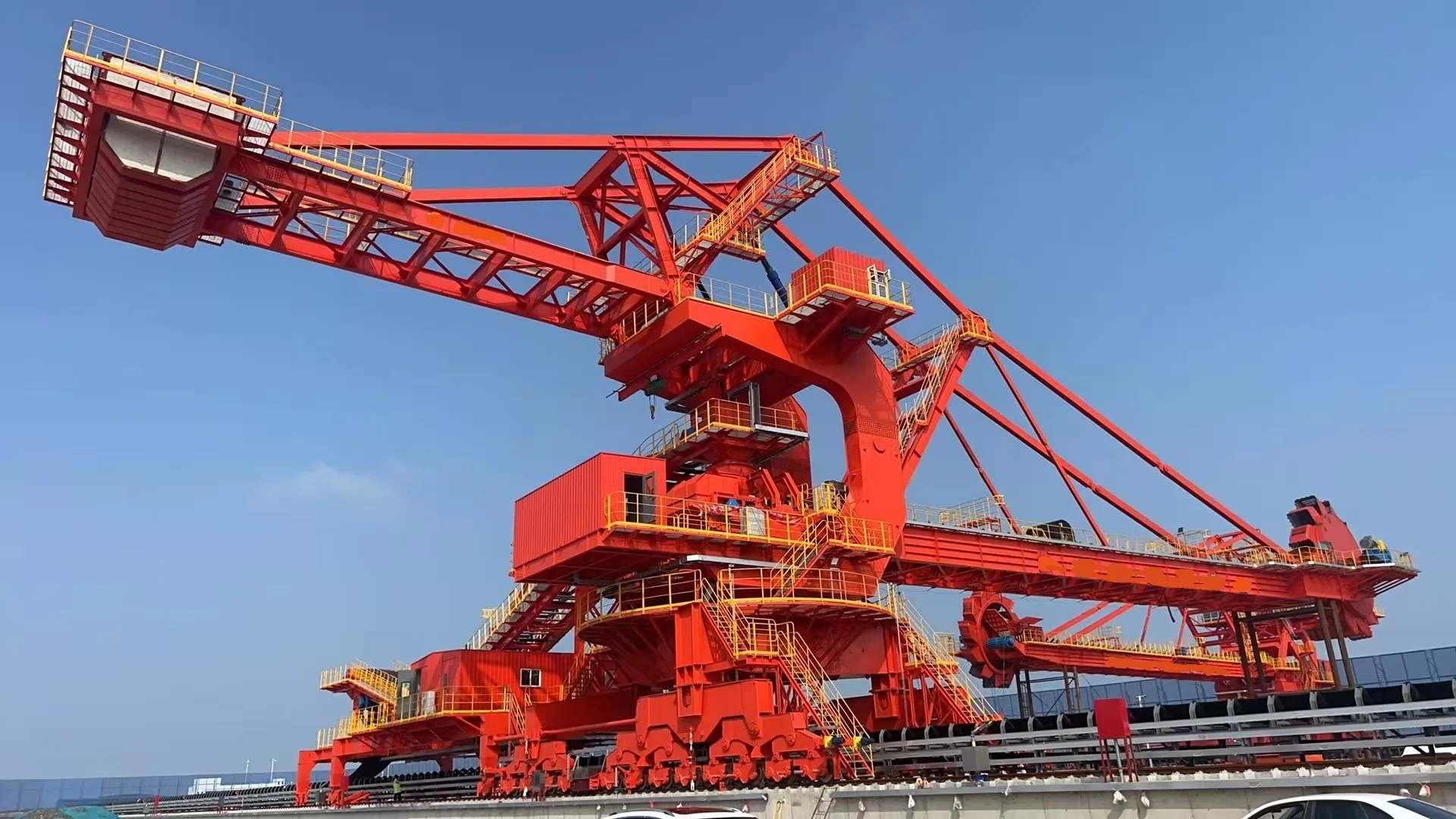


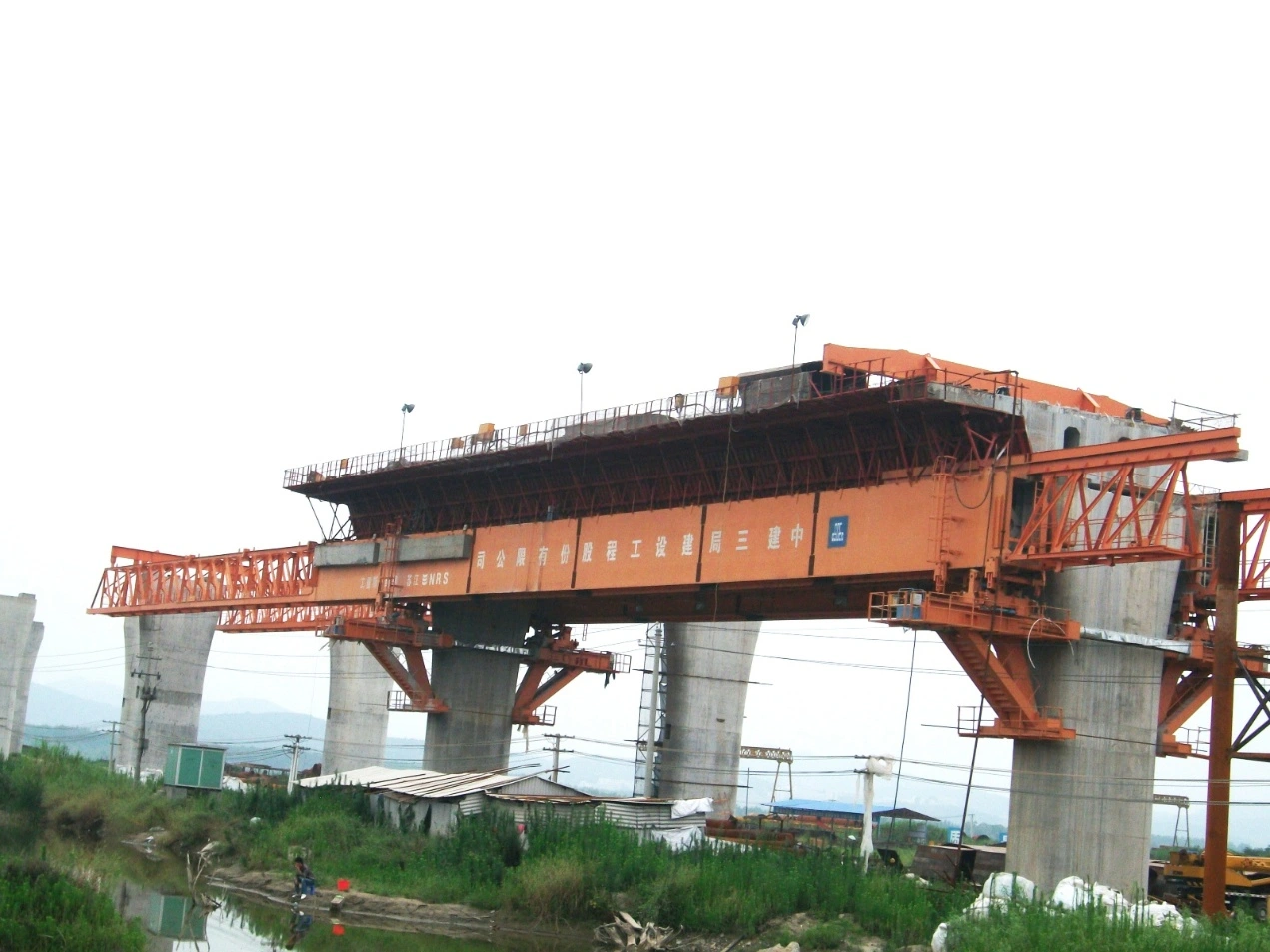

A single-girder beam launcher is a specialized bridge construction machine designed to lift and place precast concrete beams efficiently and safely. These beams can include a variety of shapes, such as “I”, “T”, “M”, and “U” beams, commonly used in modern bridge engineering. The single-girder design features one main longitudinal beam that carries the lifting trolley and launching mechanism. Compared to twin-truss systems or conventional crane-based methods, the single-girder approach offers significant advantages in terms of weight, assembly time, operational flexibility, and adaptability to constrained construction sites.
The primary components of the system include the main girder, lifting trolley, launching mechanism, and support jacks. The main girder provides the structural backbone, carrying the load of the precast beams and guiding the lifting trolley along the bridge span. The lifting trolley moves along the girder and handles the precise positioning of beams through hydraulic or electric hoists. The launching mechanism allows the equipment to advance along bridge piers without temporary ground supports, which is critical in areas with difficult terrain, over water, or in urban environments. Support jacks stabilize the launcher during operation, ensuring safety and accurate placement of beams.
In addition to its structural components, the launcher is designed for modular assembly and transport. Its lighter steel structure and efficient design make it easier to transport to the construction site and assemble on piers with minimal manpower, compared to twin-truss systems. This feature not only reduces setup time but also lowers labor costs and logistical complexity.
How a Single-Girder Beam Launcher Operates
The operation of a single-girder beam launcher is methodical, allowing teams to install multiple precast beams with high precision while maintaining safety standards. Understanding the operational workflow is critical for construction teams seeking efficiency and reliability.
The first stage involves transporting the launcher components to the site and assembling them on the bridge piers. Because the launcher is modular and relatively lightweight, assembly can be accomplished more quickly than with heavier, more complex twin-truss systems. During this stage, engineers verify the positioning and level of the launcher to ensure stability, which is essential for safe beam lifting and placement.
Once assembly is complete, the lifting trolley is positioned above the precast beam. The hoisting mechanism, either hydraulic or electric, lifts the beam carefully, controlling motion to prevent swinging, misalignment, or damage. Beam alignment with the bridge supports is verified visually and with measurement instruments, ensuring the beam fits precisely into the designated span.
Following the lifting and alignment, the launcher employs its self-launching mechanism to advance along the bridge piers to the next span. This self-launching capability eliminates the need for temporary ground supports, which is particularly advantageous for bridges over water, steep terrain, or urban areas with limited space. The movement of the launcher is gradual and controlled, with engineers monitoring load distribution and structural stability throughout the process.
Once the launcher reaches the next span, the trolley carefully lowers the beam into position. Fine adjustments are made to achieve precise alignment, proper load distribution, and structural integrity. The process is repeated for each subsequent beam, allowing for continuous, efficient operation across the entire bridge span.
| Step | Action | Key Consideration |
|---|---|---|
| 1 | Transport & assembly | Ensure stability, proper leveling, and minimal manpower |
| 2 | Lift beam | Controlled lifting, prevent swinging, accurate positioning |
| 3 | Self-launch | Maintain pier stability, advance incrementally |
| 4 | Place beam | Fine alignment, secure load transfer to supports |
Advantages of Single-Girder Beam Launchers
The single-girder beam launcher is favored in modern bridge construction because it combines operational efficiency, cost-effectiveness, and adaptability. Its lightweight design reduces steel weight and assembly complexity, allowing construction teams to install multiple beams quickly. Compared with twin-truss systems, fewer workers are required for assembly and operation, which significantly reduces labor costs and logistical challenges.
Another key advantage is the self-launching capability. Traditional systems often require temporary ground supports for each span, which adds time, material costs, and environmental considerations. A single-girder launcher moves independently along the piers, eliminating the need for these supports. This is particularly useful in high-pier bridges, over water, or in urban sites where space is limited.
The system’s flexibility also extends to the variety of precast beams it can handle. “I”, “T”, “M”, and “U” beams of different sizes can be installed using the same equipment, which reduces the need for multiple types of launchers or cranes on the same project. This adaptability allows engineers to plan and execute projects with fewer resources while maintaining a high level of precision.
| Advantage | Explanation |
|---|---|
| Fast installation | Reduced assembly time and streamlined operation |
| Reduced manpower | Minimal personnel required due to simplified setup |
| Self-launching | Moves independently along bridge piers without ground support |
| Versatile beam handling | Can accommodate multiple beam shapes and sizes |
| Adaptable to challenging sites | Suitable for high piers, water crossings, and tight alignments |
Applications of Single-Girder Beam Launchers
Single-girder beam launchers are suitable for a wide range of bridge construction scenarios. They are commonly deployed in projects with high piers or viaducts where cranes cannot safely operate. Their lightweight and modular design allows for quick installation, enabling efficient construction in elevated areas without the need for extensive scaffolding or temporary structures.
Bridges crossing rivers, canals, or other water bodies also benefit from single-girder launchers. Traditional methods requiring temporary supports in the water can be costly, time-consuming, and environmentally disruptive. The self-launching design allows beams to be placed directly from the piers, reducing environmental impact and preventing interference with water traffic.
Urban construction projects often face space constraints and alignment challenges. Single-girder launchers are compact enough to operate efficiently in these conditions. Their ability to maneuver in restricted spaces allows teams to install beams safely and quickly, even in areas where larger cranes or twin-truss systems would be impractical.
These operational advantages make single-girder launchers a preferred choice for contractors seeking to optimize both safety and efficiency in diverse construction environments.
Safety and Operational Considerations
Safety is a paramount concern when using single-girder beam launchers. Stability must be maintained through proper placement of support jacks and calibration of hydraulic systems. Load limits for both the launcher and individual beams should always be observed. Engineers should also monitor environmental factors such as wind, rain, and uneven pier surfaces, particularly for elevated spans or water-crossing operations.
Operators must be adequately trained in all aspects of launcher operation. While the system reduces manpower requirements, skilled personnel are essential to manage assembly, self-launching, beam lifting, and placement procedures. Regular maintenance is also critical to ensure long-term reliability. Hydraulic systems, lifting mechanisms, and structural components should be inspected before each operation, and the launcher should be stored in a controlled environment to prevent corrosion and structural degradation.
In addition, communication and coordination among the construction team are crucial during operation. Clear signaling, safety checks, and monitoring of the surrounding environment help reduce the risk of accidents and maintain efficiency across the project.
Comparison With Other Beam Installation Methods
When compared with twin-truss launchers or ground cranes, single-girder beam launchers demonstrate significant advantages for many bridge construction projects. Twin-truss launchers are typically heavier, more complex to assemble, and better suited for extremely long spans requiring higher load capacity. Ground cranes require open terrain and temporary supports, making them less versatile for high-pier or water-crossing bridges.
| Feature | Single-Girder Launcher | Twin-Truss Launcher | Ground Crane |
|---|---|---|---|
| Steel Weight | Lighter | Heavier | N/A |
| Assembly | Easier | Complex | N/A |
| Ground Support | Not required | Not required | Required |
| Suitability | Tight alignment, high piers | Long spans, heavy loads | Open terrain, short spans |
| Efficiency | High | Medium | Medium |
This comparison highlights why single-girder launchers are preferred in projects where speed, safety, and site adaptability are critical. Their lightweight, self-launching design provides contractors with a reliable solution for high-elevation bridges, water crossings, and urban or constrained sites.
Single-girder beam launchers provide a highly efficient, versatile, and safe solution for modern bridge construction. Their lightweight structure, self-launching capability, and ability to handle multiple beam shapes make them suitable for a wide range of projects, including high-pier bridges, water-crossing structures, and urban environments.
Understanding the operation, benefits, and safety considerations of single-girder beam launchers allows construction teams to optimize efficiency, reduce labor and material costs, and achieve precise installation of precast beams. For contractors seeking speed, accuracy, and flexibility, single-girder beam launchers represent a practical and indispensable tool in contemporary bridge construction.