



Introduction
In tunnel and bridge construction, the precision of a precast segment mould plays a critical role in project success. These moulds determine the dimensional accuracy of every concrete segment, directly affecting assembly quality, watertight performance, and long-term structural reliability.
Even small deviations can result in alignment issues, joint gaps, and costly construction delays. This article explores why precision is so important in precast segment mould engineering and how advanced mould design supports efficient, high-quality infrastructure construction.
What Is a Precast Segment Mould?
A precast segment mould is a precision-engineered steel formwork system used to manufacture concrete segments for tunnels, bridges, metro systems, utility corridors, and other large-scale infrastructure projects. It is designed to repeatedly produce segments with consistent dimensions and surface quality throughout high-volume production cycles.
Unlike conventional formwork, precast segment moulds are built for long-term durability and repeatability. They typically consist of a rigid base frame, movable side shutters, joint-forming components, and positioning systems that work together to ensure accurate segment geometry during casting.
Modern precast segment moulds are manufactured using advanced CNC machining, precision welding, and strict quality control procedures. They are widely used in the production of tunnel lining segments, bridge girders, box culverts, and other precast concrete components where consistency, efficiency, and reliability are essential.
Types of Precast Segment Moulds Used in Tunnel and Bridge Projects
Precast segment moulds are designed according to the geometry, application, and production method of the concrete segments being manufactured. Different infrastructure projects require different mould configurations to ensure production efficiency, dimensional accuracy, and long-term performance.
-
Tunnel Segment Moulds
Tunnel segment moulds are widely used to produce reinforced concrete lining segments for metro, railway, highway, and utility tunnels. These moulds must achieve extremely tight tolerances to ensure accurate ring assembly, proper gasket compression, and reliable waterproof performance. They are commonly used in projects involving Tunnel Boring Machines (TBMs).
-
Bridge Segment Moulds
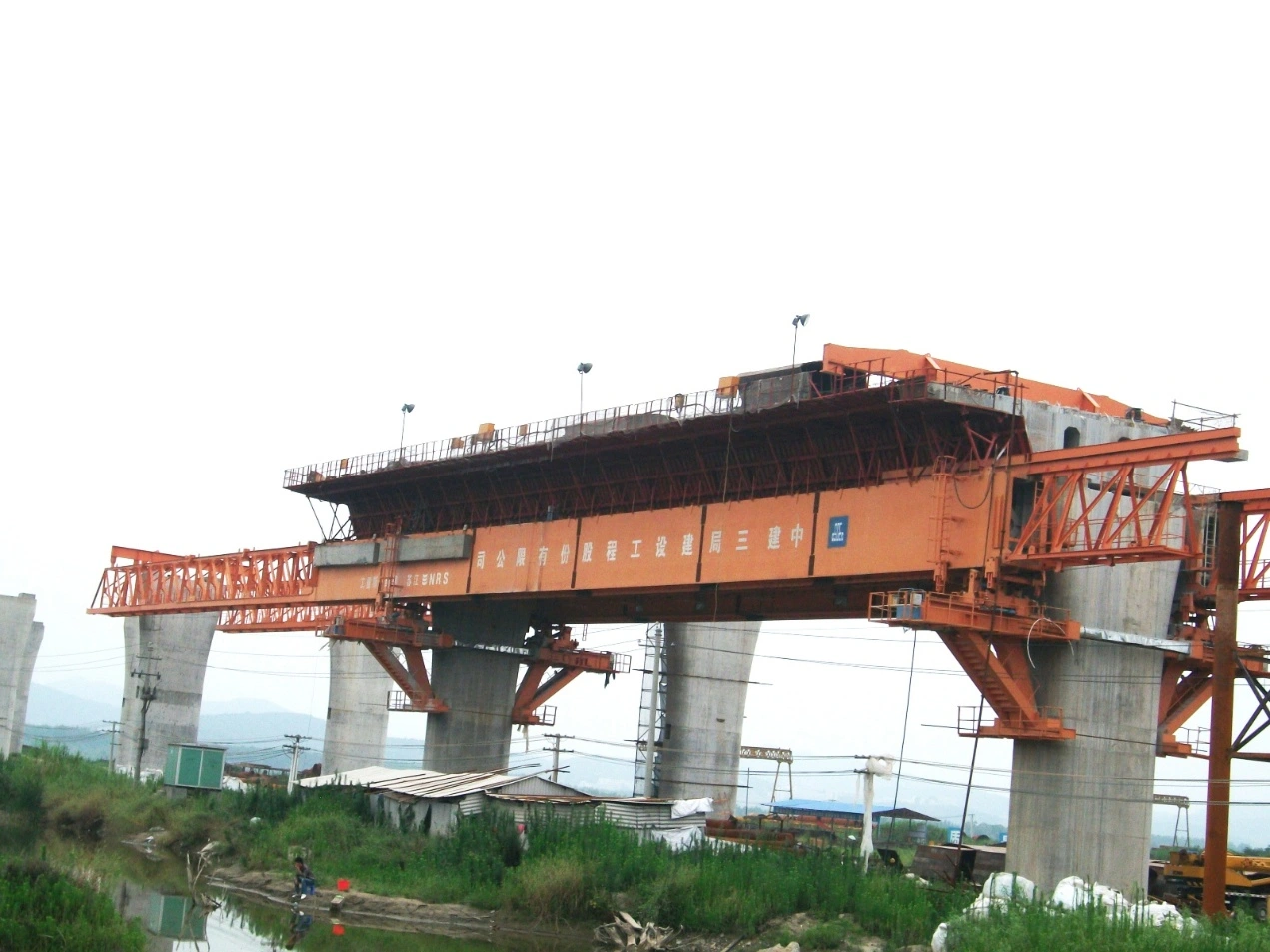
Bridge segment moulds are designed for manufacturing precast concrete segments used in segmental bridge construction. These moulds support the production of box girders, U-girders, and other structural elements that require precise alignment between adjacent segments. High-dimensional accuracy is essential to ensure smooth installation and long-term structural stability.
-
Metro Tunnel Segment Moulds
Although similar to standard tunnel segment moulds, metro tunnel moulds are typically optimized for high-volume production environments. They are often integrated into automated carousel systems and designed to support continuous manufacturing cycles while maintaining strict quality standards.
-
Box Culvert and Utility Tunnel Moulds
These moulds are used to manufacture precast concrete components for drainage systems, underground utility corridors, underpasses, and municipal infrastructure projects. Their designs focus on structural strength, efficient production, and ease of installation on site.
-
Custom Precast Segment Moulds
For projects involving unique geometries, variable tunnel alignments, or specialized engineering requirements, custom precast segment moulds can be developed to match specific segment dimensions and production methods. These tailor-made solutions help contractors achieve optimal performance while meeting project-specific technical requirements.
Selecting the appropriate precast segment mould depends on multiple factors, including segment geometry, project scale, production capacity, and required dimensional tolerances. Understanding these different mould types is the first step toward achieving reliable segment quality and efficient project execution.
The Hidden Cost of Inaccurate Segment Moulds: Real-World Lessons
A millimetre here, a half-degree there—it might not sound like much on paper. But in the world of segmental construction, these tiny deviations compound into catastrophic failures.
When Tolerances Slip: Learning from Past Failures
History provides sobering lessons. The 2017 Sydney Metro project suffered a structural failure when a stitch joint connecting two segments failed during construction—a situation that arose when match-casting practices deviated from standard protocols. The Gerrards Cross tunnel collapse revealed that 14 precast concrete segments “failed to behave as expected” after the incident, with performance issues directly linked to manufacturing quality.
Industry experts are unequivocal: “in the field of underground works, accuracy is not optional—it is an essential condition for safety, durability and performance.” When a precast segment mould delivers segments with inconsistent geometry, the tunnel lining rings cannot close properly. Bolts don‘t align. Gaskets don’t seal. And water ingress becomes inevitable—a slow but certain path to structural degradation.
The Real Cost of Rejection
Poor mould accuracy doesn‘t just risk safety; it devastates project economics. Rejected segments mean scrapped concrete, wasted labour hours, and production line stoppages. Every rejected segment also delays the Tunnel Boring Machine (TBM), which can cost between $10,000 and $50,000 per hour of downtime, depending on project scale. As one industry leader puts it, “The better the mould quality, the more segments are produced (less segment rejection), and the faster the TBM is supplied, all meaning that the client gets optimum profitability.” The message is clear: investing in precision precast segment mould engineering is not an expense—it’s a profit protection strategy.
What Makes a High-Performance Precast Segment Mould?
Understanding what separates an ordinary steel box from a precision-engineered precast segment mould is essential for any procurement decision. These are not simple formwork systems—they are sophisticated pieces of capital equipment.
Core Components That Define Precision
A complete mould system comprises several critical elements working in harmony:
-
Rigid base frame: Provides absolute stability and flatness under vibration loads
-
Movable side shutters: Define the segment‘s radial geometry with machined accuracy
-
Head shutters: Shape the critical radial joint interfaces
-
Vibration systems: Electric or pneumatic vibrators ensure uniform concrete compaction
-
Fixing pins and gasket grooves: Preserve sealing profiles during casting and demoulding
The gasket groove is particularly crucial. Advanced precast segment mould designs now incorporate machined channels that hold gaskets in place without adhesives—eliminating flammable solvents from the factory floor, improving operator safety, and ensuring consistent sealing performance.
Material Selection: The Foundation of Durability
Steel quality directly impacts mould longevity. High-strength steel grades like Q345B and Q345 manganese steel are standard in precision mould construction. The right material choice ensures that the mould withstands hundreds or even thousands of production cycles without deformation—maintaining dimensional accuracy from the first pour to the last.
Precision in Numbers: What Tolerances Actually Mean
Industry professionals throw around numbers like “tenth-of-a-millimetre accuracy” and “sub-millimetre tolerances.” But what do these figures actually mean for your project?
Industry Standards and Benchmarks
The tunnelling industry relies heavily on British Tunnelling Society (BTS) guidelines, as there is no single international standard covering dimensional tolerances for tunnel segments. However, leading manufacturers operate within exceptionally tight parameters:
| Tolerance Parameter | Typical Requirement | Critical Impact |
|---|---|---|
| Overall mould dimensional accuracy | ±0.1 mm to ±1.0 mm | Ring closure and bolt alignment |
| Joint face flatness | ±0.3 mm to ±0.5 mm | Gasket compression and watertightness |
| Shear key positioning | ±0.75 mm | Load transfer between segments |
| Radius and diagonal consistency | ±1.5 mm | Overall ring geometry |
For high-precision tunnel applications, tolerances can be as fine as 0.3 mm for perfect ring assembly. Some manufacturers achieve even tighter control: after 1,100 production cycles, 92% of moulds maintain deviation below 0.3 mm, 98% below 0.4 mm, and 100% respect the maximum tolerance of 0.5 mm.
Why These Numbers Matter
A 0.5 mm deviation doesn‘t sound like much—it’s thinner than a credit card. But multiply that error across 10 segments in a ring, and you‘re looking at a cumulative gap of 5 mm. Multiply it across 50 rings in a tunnel drive, and the alignment error becomes centimetres—enough to compromise the entire tunnel’s geometry and require costly remedial work. This is why precision must be engineered into the precast segment mould itself, not corrected through post-production adjustments.
Manufacturing Excellence: From Raw Steel to Finished Mould
The journey from steel plate to precision mould involves multiple stages where quality can be gained or lost.
Advanced Fabrication Technologies
Modern precast segment mould manufacturing relies on state-of-the-art equipment to achieve the required tolerances:
-
CNC laser cutting: Delivers clean edges and exact dimensions before assembly
-
Precision welding with robotic systems: Prevents thermal deformation while ensuring perfect seam alignment
-
CNC machining: Achieves accuracy up to a tenth of a millimetre on critical surfaces
-
Large-capacity bending machines: Shape heavy steel plates to exact radii
Quality Verification Systems
A precision precast segment mould is not complete until it passes rigorous inspection:
-
3D laser tracker inspection: Captures dimensional data of the fully assembled mould
-
Trial segment production: Verifies fit with match-cast neighbours
-
Coordinate calculation software: Provides precise joint coordinates for production control
-
Data archiving: Creates traceable records for every mould produced
Some manufacturers now offer software solutions that calculate theoretical segment joint coordinates and span pre-cambers—enabling precise control of the short line casting process. This digital integration bridges the gap between design geometry and physical production.
Precast Segment Moulds vs Traditional Formwork: A Clear Winner
Understanding why precast segment moulds dominate modern infrastructure construction requires a direct comparison with traditional cast-in-place formwork systems.
| Feature | Precision Precast Segment Mould | Conventional Cast-in-Place Formwork |
|---|---|---|
| Dimensional accuracy | ±0.1 mm to ±0.5 mm | ±5 mm or greater |
| Production repeatability | Hundreds of identical cycles | New setup for each pour |
| Quality control environment | Factory-controlled conditions | Site-dependent variables |
| Labour requirement | Lower, automated | Higher, manual-intensive |
| Weather dependency | Minimal (indoor production) | Significant delays |
| Material waste | Optimized, minimal | Higher from site variables |
| Project speed | Parallel production possible | Sequential construction only |
Traditional formwork is designed for single-use or limited reuse applications, whereas steel precast segment moulds are “designed for repeatability, precision, and durability—capable of withstanding hundreds of production cycles without deformation.” For large-scale tunnel projects requiring thousands of identical segments, the choice is not even close.
Long-Line vs Short-Line Casting: Matching Method to Project
Two primary casting methods dominate segment production, each with distinct requirements for mould design and operation.
-
Long-Line Casting Method
In long-line casting, segments are produced in a continuous line, with each segment cast directly against its neighbour. The precast segment mould moves along the production line, allowing for high-volume output. This method suits projects with relatively straight alignment and consistent segment geometry—such as long road tunnels or metro lines with minimal curvature.
-
Short-Line Casting Method
Short-line casting uses a single mould station where each segment is cast against the previous one using a matching face. This method excels for curved tunnels, tapered alignments, or variable segment geometries. The precast segment mould in short-line systems must accommodate precise match-casting interfaces, requiring even tighter control over joint face geometry. Many short-line systems integrate coordinate calculation software to ensure each segment matches its specific neighbours.
-
Full-Span Casting for Bridges
For bridge applications, full-span casting methods produce entire spans in a single pour. Precast segment mould systems for box girder and I-beam applications support single, double, or triple box configurations, offering flexibility for various bridge designs.
Automation and Digital Integration: The Future of Precast Production
The industry is moving decisively toward automated production systems—and for good reason.
Carousel Systems and Turnkey Solutions
Automated carousel systems now represent more than half of all segment projects in mature markets. These systems rotate moulds through successive stations—reinforcement placement, concrete pouring, vibration, curing, and demoulding—in a continuous flow. The result is consistent quality, reduced labour dependency, and predictable production rates.
Digital Quality Management
Modern precast segment mould operations increasingly incorporate digital quality management systems. Some manufacturers have developed segment documentation systems that track every production parameter, providing full traceability from raw material to finished segment. LiDAR and BIM technologies are emerging for QA/QC workflows, enabling seamless off-site and on-site quality verification.
Predictive Maintenance and Data Analytics
The next frontier involves IoT-based monitoring systems that track vibration frequency, curing time, and production cycles. This data-driven approach enables predictive maintenance—identifying when a precast segment mould requires adjustment before deviations affect segment quality.
Industry Adoption: Who Uses Precision Segment Moulds?
The application range for precision precast segment mould technology extends across the entire infrastructure spectrum:
-
Urban metro systems: Thousands of identical segments required for rapid tunnelling
-
Road tunnels: Often larger diameters with complex geometry
-
Rail tunnels: High-speed alignments demanding exceptional precision
-
Bridge construction: Box girder and I-beam segments for elevated structures
-
Hydropower projects: Penstock and tunnel lining applications
-
Underground utilities: Large-diameter water and sewage tunnels
-
Cut-and-cover structures: Precast box culverts for underpasses and crossings
Leading manufacturers have supported over 650 projects worldwide, supplying more than 30,000 individual moulds across every continent. From the Channel Tunnel to major infrastructure projects in Asia, the Middle East, and the Americas, precision segment mould technology underpins modern civil engineering.
Key Considerations When Specifying a Precast Segment Mould
When selecting a precast segment mould supplier, procurement teams should evaluate several critical factors:
Engineering Expertise
-
Does the supplier perform Finite Element Method (FEM) structural analysis for stiffness and mechanical behaviour?
-
Can they provide custom engineering for your specific tunnel geometry?
-
Do they offer coordinate calculation software for short-line casting control?
Manufacturing Capability
-
Do they use CNC laser cutting and precision machining?
-
What quality control systems (3D laser tracking, inspection protocols) are in place?
-
Can they demonstrate documented tolerance control over multiple production cycles?
Track Record and Reference
-
How many projects has the manufacturer completed?
-
Can they provide references from similar-scale projects?
-
What is their typical delivery timeline for complex moulds?
After-Sales Support
-
Does the supplier provide on-site installation supervision?
-
What maintenance support and spare parts availability exist?
-
Is training included for your production team?
The Bottom Line: Precision Is Not Optional
In tunnel and bridge construction, the precision of a precast segment mould directly determines segment fit, assembly efficiency, watertight performance, and overall project success. It is not an optional quality feature but a core requirement for safe and efficient infrastructure delivery.
For contractors and manufacturers, investing in a high-precision mould helps reduce rejection rates, improve production stability, and ensure consistent segment quality throughout the project lifecycle. Beyond cost, factors such as engineering design, manufacturing accuracy, and durability should be key evaluation criteria when selecting a mould supplier.
Need a Reliable Precast Segment Mould Solution?
NRS Heavy Industry provides custom precast segment mould systems for tunnel, bridge, and box culvert applications, including long-line, short-line, and full-span casting solutions.
Contact our team to discuss your project requirements and get a tailored engineering solution.