



Introduction
Building long‑span bridges over rivers, deep valleys, or existing transport corridors presents a fundamental challenge: how do you place formwork and pour concrete when there is nothing below to support it? Traditional ground‑based scaffolding is often impossible, costly, or environmentally damaging.
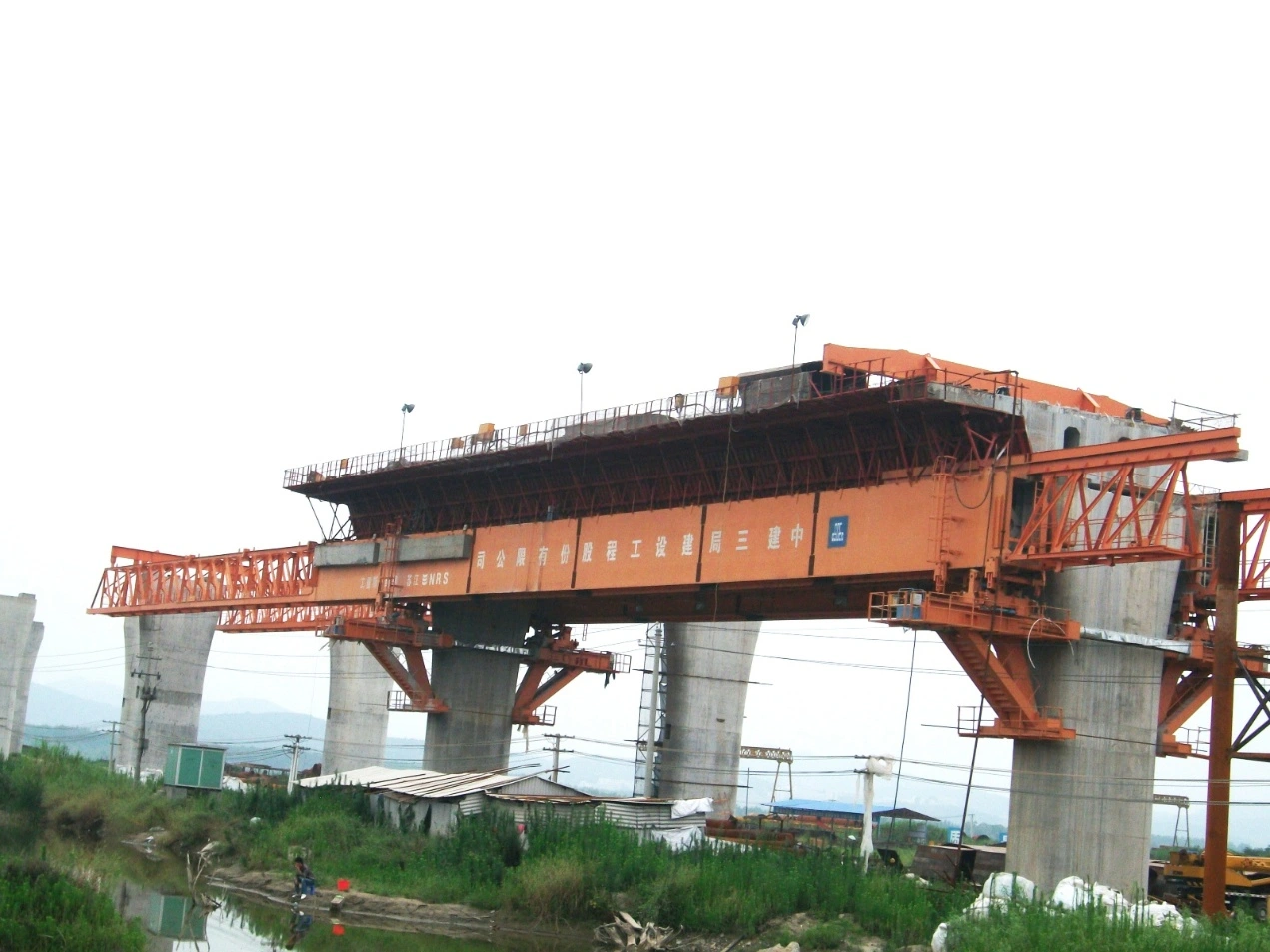
The answer is the Form Traveler System for Bridge Construction—a movable steel structure that hangs from the already completed part of the bridge and advances segment by segment, allowing concrete to be cast in mid‑air. This Form Traveler System for Bridge Construction is widely known as the balanced cantilever method, enabling the construction of post‑tensioned concrete box girder bridges and cable‑stayed concrete bridges without any falsework beneath the span. This article explains the working principle of the Form Traveler System for Bridge Construction, its key components, advantages, applications, and the market outlook for this essential Form Traveler System for Bridge Construction technology.
What Is a Form Traveler System for Bridge Construction?
A Form Traveler System for Bridge Construction (also referred to as a travelling formwork system or formwork traveler) is a specialised movable construction device used for the cast‑in‑situ construction of bridge decks by the free cantilever method. It is essentially a self‑supporting mobile workshop that carries its own formwork, reinforcement, and fresh concrete without relying on ground‑based support. Contractors choose a Form Traveler System for Bridge Construction when they need to build over obstacles where scaffolding is impossible.
The system is used for the in‑situ construction of post‑tensioned concrete box girder bridges and cable‑stayed concrete bridges, as well as arch bridges by the cantilever method. The “Bridgebuilder” form traveller, a well‑known design, was invented in 1970 and has since become the most reliable and extensively used Form Traveller System for Bridge Construction worldwide.
A form traveler generally comprises a frame that provides support for the formwork, together with rollers or rails enabling it to travel forward incrementally to each new section. It is supported by the part of the bridge structure that has already cured and extends beyond the end of the structure to support the formwork where the next segment is to be cast. Every Form Traveler System for Bridge Construction must be carefully engineered to match the specific bridge geometry and load requirements.
The Working Principle of the Form Traveler System for Bridge Construction
The Form Traveler System for Bridge Construction’s working principle follows a well‑established sequential process known as the balanced cantilever method. Understanding this working principle is essential for anyone specifying a Form Traveler System for Bridge Construction.
Step‑by‑Step Construction Cycle
The construction cycle of a Form Traveler System for Bridge Construction typically involves the following stages:
-
Step 1 – Initial installation: After the construction of the pier segment (segment 0), two form travelers are installed symmetrically on both sides of the pier.
-
Step 2 – Reinforcement and formwork: The external and internal formwork is positioned, levelled, and fixed. Steel reinforcement cages are placed within the formwork.
-
Step 3 – Concrete pouring: Concrete is cast into the formwork to create the next bridge segment, typically 3 to 6 metres in length.
-
Step 4 – Curing and prestressing: After the concrete reaches sufficient strength, post‑tensioning tendons are tensioned to apply compressive stress to the segment.
-
Step 5 – Form traveler advancement: The form traveler is released from its anchor points. Hydraulic or mechanical systems move the traveler forward along rails to the next segment position, leaning on the preceding cured segment.
-
Step 6 – Repetition: The cycle repeats until the two advancing cantilevers meet at the mid‑span closure.
The key to this method is balance: the two form travelers move at an equal pace, keeping the structure symmetrical and preventing unbalanced moments that could cause structural failure. A well‑designed Form Traveler System for Bridge Construction ensures that this balance is maintained throughout the project.
Overhead vs. Underslung Form Travelers
Form travelers can be configured in two main orientations: overhead and underslung.
-
Overhead form travelers have their main truss structure located above the deck being constructed. This configuration is generally easier to operate, easier to modify for future usage, and allows rapid erection on the pier top in as little as one week.
-
Underslung form travelers hang below the bridge deck, leaving the top surface unobstructed. They are well‑suited for arch and cable‑stayed structures, leaving no obstruction to temporary or permanent cables and offering the opportunity for easy back‑launching.
Both types are designed for free cantilever construction of pre‑stressed girder and cable‑stayed concrete bridges, and both can be customised to fit the specific geometry of each project. Selecting the right orientation for your Form Traveler System for Bridge Construction depends on site constraints and bridge type.
Core Components of a Form Traveler System for Bridge Construction
A complete Form Traveler System for Bridge Construction equipment components consists of several integrated subsystems that work together to support, position, and move the formwork. Each component of the Form Traveler System for Bridge Construction must be manufactured to high tolerances.
Main girder system: The primary load‑bearing structure of the form traveler, typically constructed from steel trusses or box sections. It supports the weight of the formwork, fresh concrete, reinforcement, and construction loads.
Traveling system: Rollers, rails, and hydraulic or mechanical mechanisms that allow the form traveler to move forward to each new segment after concrete curing.
Anchor system: Includes rear anchors that secure the form traveler to the previously cast bridge segment, preventing forward tipping during concrete pouring. The safety factor of the anchor system should not be less than 2 during concrete casting.
Bottom basket system: A suspended platform that supports the bottom formwork and provides access for workers to the underside of the bridge deck.
Suspension system: Thread bars or high‑strength steel rods that suspend the formwork from the main structure of the form traveler.
Formwork system: The moulds that give the bridge segment its shape, including bottom slab, web, and deck slab formwork.
Platform and protection system: Working platforms and safety barriers that provide safe access for personnel during reinforcement placement, concrete pouring, and formwork adjustment.
Hydraulic system (optional): Used for precise movement control, formwork adjustment, and levelling operations. Fully hydraulic systems ensure full precision control during construction.
Control and monitoring devices: Modern systems increasingly incorporate intelligent monitoring for real‑time data collection, early warning alerts, and quality control. This intelligence is increasingly standard in any modern Form Traveler System for Bridge Construction.
Key Technical Specifications
When selecting a Form Traveler System for Bridge Construction, engineers consider the following technical parameters.
The table below summarises typical specifications for standard form traveler units.
| Specification Parameter | Typical Value / Range |
|---|---|
| Maximum segment length | 5 m (standard); can be customised for longer segments |
| Load capacity (concrete + formwork) | 250 to 400 tonnes |
| Steel weight of the form traveler | 25 to 65 tonnes, depending on bridge cross‑section |
| Maximum deflection under full load | Less than 25 mm |
| Concrete curing cycle per segment | 5 days typical |
| Erection time on the pier top | As short as 1 week (overhead type) |
| Maximum design weight of the form traveler | Should not exceed 10% of the design weight of the bridge segment |
These specifications demonstrate the robust engineering behind high‑quality form traveler systems. In comparison, traditional ground‑supported scaffolding for a similar bridge span would require significantly more material, longer setup time, and greater environmental disruption. A properly rated Form Traveler System for Bridge Construction ensures both safety and efficiency.
Key Advantages of Using a Form Traveler System
The Form Traveler System for Bridge Construction advantages make it the preferred technology for long‑span concrete bridges where ground access is restricted.
No Ground‑Based Support Required
The most significant advantage of the Form Traveler System for Bridge Construction is that it requires no falsework or scaffolding beneath the span. The form traveler hangs entirely from the already completed portion of the bridge, making it ideal for construction over rivers, deep valleys, railways, or existing roads where installing ground supports would be impractical, expensive, or environmentally damaging. This alone justifies the investment in a Form Traveler System for Bridge Construction.
Shorter Construction Timelines
A typical concreting cycle per segment can be as short as 5 days. By allowing symmetrical casting on both sides of a pier simultaneously, the Form Traveler System for Bridge Construction effectively halves the time required compared to one‑sided construction methods. For a long‑span bridge of 30 or more segments, this time saving amounts to months of reduced project duration. Construction managers appreciate how a Form Traveler System for Bridge Construction accelerates project delivery.
Reduced Labor Costs
Optimised form traveler products that save labor costs are a major selling point for contractors. Some industry sources report that cantilever form travelers can reduce labor costs by up to 30% compared to alternative methods. A well‑engineered Form Traveler System for Bridge Construction directly impacts the bottom line.
Precise Geometry Control
Form travelers produce highly accurate segment connections, ensuring consistent alignment, elevation, and bridge curvature. This precision is particularly important for curved or variable‑section bridges where maintaining the designed geometry is challenging. The Form Traveler System for Bridge Construction delivers repeatable accuracy, segment after segment.
Lightweight and Cost‑Effective Design
Modern form traveler systems are increasingly designed to be lighter, minimising logistics and transportation costs. A lighter form traveler also reduces the load on the completed bridge segments, improving overall construction safety.
Versatility and Reusability
Form travelers can be easily adjusted to suit different deck geometries and re‑adapted to new projects after the completion of one bridge. This reusability makes them a cost‑effective long‑term investment for contractors specialising in bridge construction. A single Form Traveler System for Bridge Construction can serve multiple projects with minimal modification.
Types of Form Traveler Systems
Different bridge types and construction conditions call for different form traveler configurations.
| Type | Description | Best Application |
|---|---|---|
| Triangle Form Traveler | Simple triangular truss structure; high load‑bearing capacity; convenient for assembly and disassembly | Box girder bridges with moderate spans |
| Rhombic Form Traveler | Diamond‑shaped truss configuration; known for clear force transmission and explicit load paths | Large‑span continuous beam bridges require high capacity |
| Cable‑Stayed Form Traveler | Specialised design that works around stay cables without obstruction | Cable‑stayed concrete bridges |
| Overhead Form Traveler | The main truss sits above the deck level | Where top‑surface access is acceptable |
| Underslung Form Traveler | System hangs below the deck, leaving the top surface unobstructed | Arch and cable‑stayed structures |
The selection of form traveler type depends primarily on bridge geometry, segment weight, site access conditions, and contractor preference. Regardless of type, each Form Traveler System for Bridge Construction must be certified for the intended load.
Applications of the Form Traveler System
Form Traveler System for Bridge Construction applications spans a wide range of civil infrastructure projects.
-
Long‑span highway bridges: The technology is used extensively for casting cantilever beam bridges with large spans, particularly when crossing obstacle sections such as valleys and rivers.
-
Railway and metro viaducts: Repetitive segment construction over long distances benefits from the standardised construction cycles of form travelers.
-
Cable‑stayed concrete bridges: Specialised form travelers are designed to work around and between stay cables without causing obstructions.
-
Segmental bridge construction: Frequently used for cantilever bridge construction, where spans are cast one segment at a time.
-
Urban overpasses: Where scaffolding would obstruct traffic below, form travelers offer a non‑intrusive construction method.
-
Cut‑and‑cover tunnels: Form travellers provide efficient casting of repetitive sections in tunnel construction.
Each of these applications benefits from the unique capabilities of a Form Traveler System for Bridge Construction.
Form Traveler vs. Alternative Construction Methods
When selecting a construction method for a long‑span concrete bridge, contractors typically compare form travelers against alternative approaches.
| Method | Key Features | Advantages | Limitations |
|---|---|---|---|
| Form Traveler System | Segmental balanced cantilever casting; no ground support | Minimal site disruption; precise geometry control; suitable for deep valleys, water crossings, urban sites | Requires careful load balancing; initial setup cost |
| Movable Scaffolding System (MSS) | Self‑launching system that spans from pier to pier; supports full span formwork. | Faster for moderate spans; less segmented construction; fewer joints in the final deck | Requires sufficient pier spacing; heavier equipment; less adaptable to curved alignments |
| Full Span Launching Gantry | Large gantry that lifts and places complete precast segments or entire spans | Very fast for repetitive spans with identical geometry; high degree of mechanisation | High capital cost; requires a dedicated precasting yard; limited to constant‑depth sections |
| Ground‑Based Scaffolding | Temporary support towers built from the ground up | Simple to design; low equipment cost for low‑height, short‑span bridges | Impractical over water or deep valleys; high environmental impact; obstructs ground access |
| Incremental Launching | The bridge deck was cast behind one abutment and pushed forward over temporary supports. | Efficient for straight, constant‑depth bridges with many equal spans | Difficult for curved or variable‑depth sections; requires strong launching equipment |
For the specific case of long‑span bridges over water, deep valleys, or existing infrastructure, the Form Traveler System for Bridge Construction offers the best combination of feasibility, safety, and construction speed. That is why engineers continue to specify this Form Traveler System for Bridge Construction for challenging environments.
Safety Considerations for Form Traveler Operation
Safety is paramount in all bridge construction operations, and form travelers are no exception.
Intelligent monitoring systems are increasingly integrated into form travelers for real‑time data collection, intelligent early warning, and data management, with the core function of ensuring construction safety and engineering quality. When you deploy a Form Traveler System for Bridge Construction, these monitoring features become part of your safety protocol.
Key safety design requirements include: the total weight of the form traveler should not exceed 10% of the design weight of the bridge segment being cast; the safety factor of the self‑anchored system should not be less than 2 during concrete pouring; and protective measures are required when using finishing thread reinforcing steel bars as suspenders. Every Form Traveler System for Bridge Construction must meet these safety benchmarks.
Worker protection is enhanced by form travelers compared to traditional scaffolding. They provide stable platforms with integrated guardrails, reducing the risk of falls from height. Additionally, safety harness attachment points are typically incorporated into the system design.
The Global Market Outlook for Form Traveler Systems
The Form Traveler System for Bridge Construction market is experiencing significant growth, driven by increasing infrastructure investment worldwide.
According to DataIntelo, the global Bridge Form Traveler Systems market reached USD 482.7 million in 2024, with a projected CAGR of 6.2% from 2025 to 2033, reaching USD 832.4 million by 2033. This growth is driven by large‑scale bridge construction projects, modernisation of transport networks, and increasing investments in sustainable infrastructure solutions. Demand for each Form Traveler System for Bridge Construction is rising as more countries invest in transport infrastructure.
MarketIntelo offers a broader estimate, valuing the global market at USD 1.2 billion in 2024 with a forecast of USD 2.15 billion by 2033 at a CAGR of 6.5%.
Regionally, Asia Pacific dominates the market, accounting for the largest share due to rapid urbanisation, extensive infrastructure development, and significant government investment in transportation. Europe remains a strong market driven by the rehabilitation of aging bridges, while North America is witnessing steady growth from federal infrastructure initiatives and the replacement of obsolete bridge structures.
The bridge construction market as a whole stood at USD 120.65 billion in 2025 and is forecast to reach USD 163.21 billion by 2030, representing a 6.23% CAGR. This broader market growth directly supports continued demand for form traveler systems. As projects multiply, so does the need for a reliable Form Traveler System for Bridge Construction.
FAQ
1. What is a form traveler system for bridge construction?
A Form Traveler System for Bridge Construction is a movable steel system used to cast concrete bridge segments in sequence without ground supports. It hangs from the completed portion of the bridge and advances segment by segment.
2. How many days does each construction cycle take?
A typical cycle, from reinforcement placement to concrete pouring, curing, prestressing, and form traveler advancement, takes approximately 5 days per segment under normal conditions when using a Form Traveler System for Bridge Construction.
3. What is the difference between overhead and underslung form travelers?
Overhead travelers have their structure above the deck, offering easier operation and modification. Underslung travelers hang below, leaving the deck surface unobstructed, making them preferable for cable‑stayed and arch bridges. Both are valid configurations of a Form Traveler System for Bridge Construction.
4. What types of bridges can be built with a form traveler system?
A Form Traveler System for Bridge Construction is used for post‑tensioned box girder bridges, cable‑stayed concrete bridges, arch bridges, and continuous beam bridges—particularly those with long spans crossing valleys, rivers, or urban areas.
5. How much does a form traveler system cost?
Costs vary based on load capacity, segment length, and customisation. For an accurate estimate, contact manufacturers directly with your project specifications. A Form Traveler System for Bridge Construction is a capital investment that pays off over multiple projects.
Conclusion
The Form Traveler System for Bridge Construction has revolutionised how long‑span concrete bridges are built. By enabling balanced, segmental casting from piers outward without any ground‑based support, this technology has made possible countless bridges that would otherwise be unbuildable or prohibitively expensive.
From the Form Traveler System for Bridge Construction working principle of symmetrical advancement to the precision design of its proprietary Form Traveler System for Bridge Construction equipment components, every aspect of this technology is engineered for safety, efficiency, and structural integrity. Key Form Traveler System for Bridge Construction advantages include elimination of ground‑based falsework, accelerated construction schedules, enhanced worker safety, and significant cost savings over traditional alternatives. Choosing the right Form Traveler System for Bridge Construction is a strategic decision for any major infrastructure project.
With the global form traveler market projected to grow at 6.2% to 6.5% CAGR through 2033, driven by unprecedented infrastructure investment worldwide, this technology is not merely an option for contractors—it is increasingly a necessity. A proven Form Traveler System for Bridge Construction can be the difference between project success and costly delays.
When are you ready to use a high-quality form traveler for your next bridge project? Let us know anytime.